
Copper and its alloys present unique challenges in surface grinding operations. Furthermore, understanding these challenges is essential for achieving precision tolerances and extending tool life. Consequently, this comprehensive guide covers everything from wheel selection to coolant strategies, helping manufacturers optimize their copper grinding processes effectively.
Understanding Copper Alloys and Grinding Fundamentals
Surface grinding for copper requires a thorough understanding of material properties. Therefore, the choice of copper alloy significantly impacts grinding parameters and techniques. Pure copper (C11000) offers excellent electrical and thermal conductivity, making it ideal for electrodes and electrical components. However, its soft, ductile nature causes common grinding challenges such as wheel loading and surface contamination. Common copper alloys include C26000 (Cartridge Brass), C51000 (Phosphor Bronze), and C17200 (Beryllium Copper), each requiring specific grinding approaches.
Different copper alloys exhibit varying hardness and thermal conductivity. Moreover, these properties directly influence wheel selection and grinding parameters. As a result, manufacturers must identify specific alloys before processing. Consequently, material certification ensures consistent results across production batches.
Key Properties Affecting Grindability
Soft copper alloys tend to load grinding wheels rapidly, and wheel porosity and structure become critical selection factors. Furthermore, copper conducts heat efficiently but expands considerably during grinding, creating thermal gradients that distort workpieces. As a result, consistent cooling and reduced feed rates help maintain dimensional accuracy. Moreover, achieving mirror finishes demands careful parameter control with fine-grained wheels and appropriate speeds.
Optimal Grinding Wheel Selection for Copper
Wheel selection fundamentally determines grinding success. Therefore, matching wheel specifications to copper characteristics is essential. Silicon carbide (SiC) wheels excel with copper alloys, and SiC’s sharp cutting points slice through soft materials without excessive heat generation. As a result, manufacturers consistently achieve better surface finishes with SiC compared to aluminum oxide wheels.
Soft-grade wheels with open structures prevent loading, and medium grit sizes (60-120) balance material removal with surface quality. Furthermore, vitrified bonds provide consistent wheel geometry and thermal resistance. Moreover, regular dressing maintains wheel sharpness and prevents loading issues. Consequently, automated dressing systems integrated with CNC grinders optimize this balance.
Wheel Specifications and Dressing Requirements
Water-soluble oils with anti-weld additives prevent copper from sticking to the wheel. Moreover, high-volume flood cooling provides continuous heat removal, and coolant systems should deliver minimum 20 GPM per wheel width inch. Consequently, regular filtration and concentration monitoring maintain consistent performance.
Grinding Parameters and Coolant Strategies
Optimal parameters vary by alloy composition and application requirements. Consequently, systematic parameter development ensures consistent quality. Lower surface speeds (1,500-2,500 SFM) reduce heat generation, and reduced feed rates minimize material displacement. Furthermore, conservative depth of cut (0.001-0.003″ per pass) prevents thermal damage. As a result, multiple light passes typically produce better results than single aggressive passes.
Parameter Optimization Techniques
Directed nozzles at the grinding zone maximize cooling efficiency. Therefore, coolant delivery positioning proves critical for heat management. Furthermore, temperature monitoring and parameter control prevent metallurgical damage. Consequently, consistent dressing schedules improve overall process capability.
Fixturing, Defects, and Industrial Applications
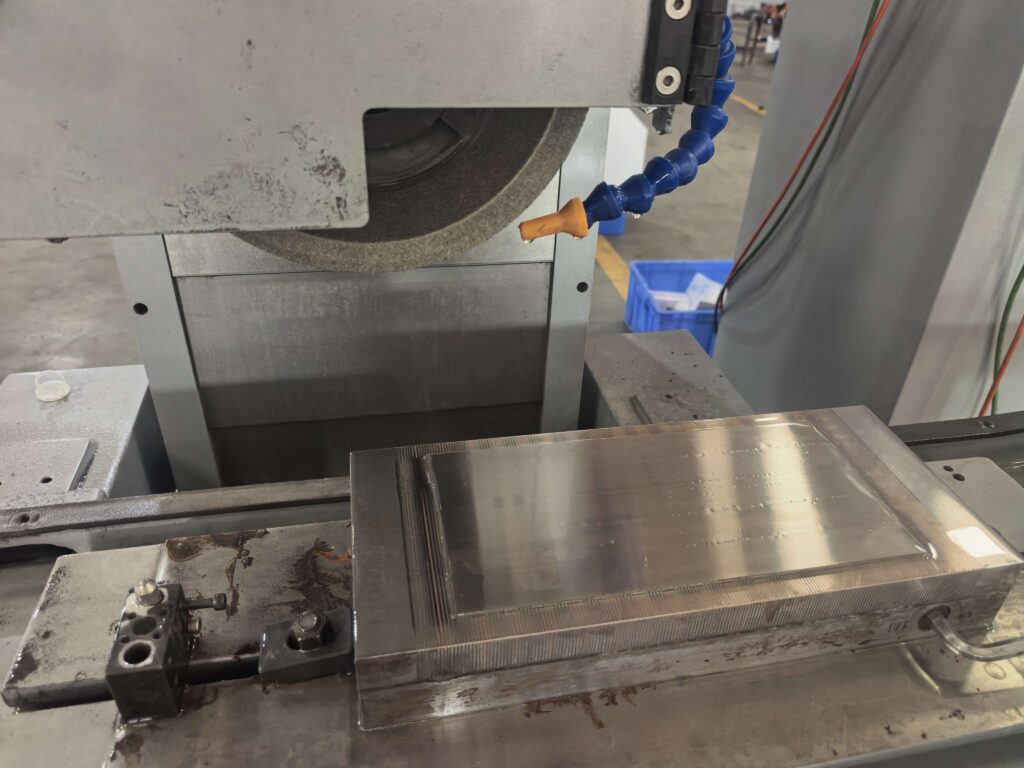
Proper workholding prevents distortion and ensures accuracy. Furthermore, understanding defect causes enables proactive prevention and application-specific solutions. Vacuum chuck systems provide even pressure distribution without mechanical distortion. Furthermore, electromagnetic chucks with reverse polarity solve challenges with non-ferrous copper. Consequently, clamping forces must balance security with material integrity.
Improper wheel selection or loaded wheels cause surface scratches, and insufficient cooling causes thermal damage. As a result, temperature monitoring and parameter control prevent metallurgical damage. Consequently, consistent dressing schedules improve overall process capability.
Application Areas for Ground Copper
Ground copper components serve critical functions in electrical connectors, heat sinks, EDM electrodes, and marine seals. Therefore, understanding applications guides specification development. Furthermore, precision-ground surfaces maximize thermal transfer efficiency with flatness below 0.001″.
YUTON Surface Grinders: Optimized for Copper Processing
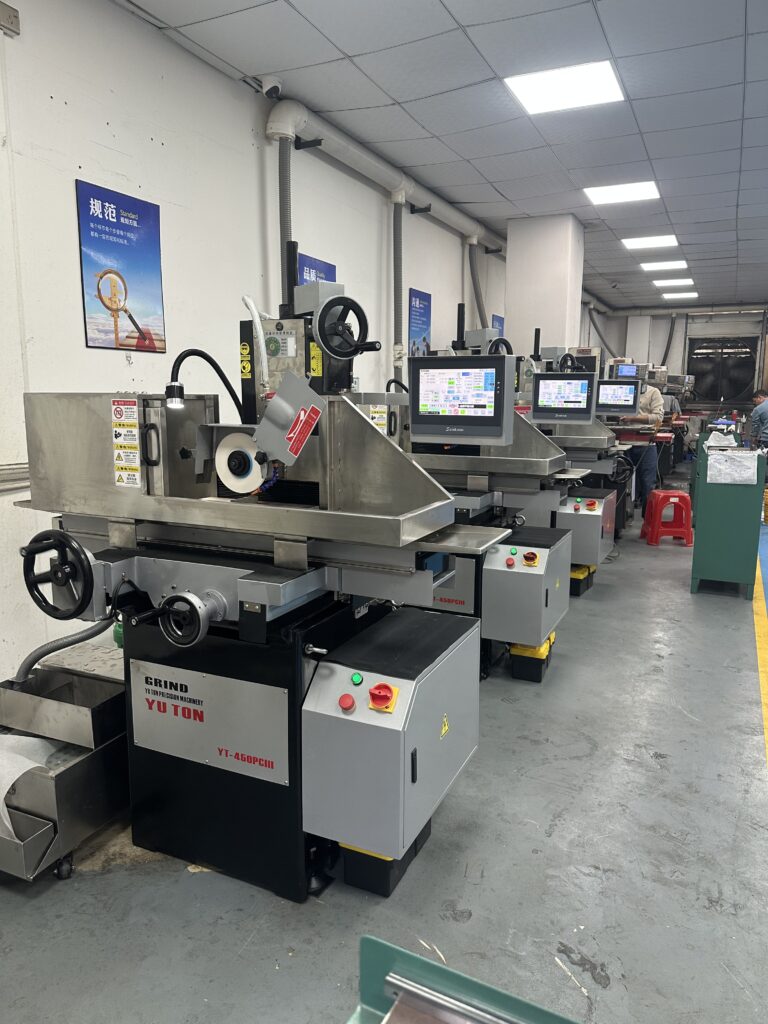
YUTON (广东宇同精密机械有限公司) delivers precision surface grinders optimized for copper alloy processing. Furthermore, their PLC-controlled systems offer exceptional flexibility for varied production requirements.
YUTON’s PLC hand-automatic integrated grinders combine manual operation with automated precision, and operators can switch between manual and automatic modes seamlessly. Moreover, all YUTON grinders maintain ISO 9001 and CE certifications, and their 15,000㎡ manufacturing facility employs 150 skilled technicians producing 3,100 units annually. Consequently, YUTON ranks among China’s top three surface grinder manufacturers. Furthermore, YUTON integrates Japanese, Taiwanese, and American core components throughout their machines, ensuring proven reliability and extended service life.
FAQ: Surface Grinding for Copper
Q1: What wheel is best for grinding copper?
Silicon carbide (SiC) wheels with soft grades and open structures work best for copper grinding. Furthermore, vitrified bonds provide consistent cutting and thermal resistance. Moreover, grit sizes between 60-120 balance material removal with surface finish quality.
Q2: How do you prevent wheel loading when grinding copper?
Use open-structure wheels with frequent dressing and abundant coolant flow. Consequently, anti-weld additives in coolant prevent copper from adhering to wheel grains. Furthermore, lower cutting speeds reduce heat and loading tendency.
Q3: What coolant ratio is ideal for copper surface grinding?
Water-soluble oils at 5-10% concentration provide optimal cooling and lubrication for copper grinding. Moreover, flood cooling with directed nozzles maintains consistent temperatures. As a result, proper coolant management extends wheel life significantly.
Q4: How do you achieve mirror finish on copper?
Fine-grained wheels (180-320 grit), low feed rates, and consistent wheel dressing produce mirror finishes on copper. Furthermore, light spark-out passes eliminate subsurface damage. Consequently, proper technique yields reflective surfaces without burn marks.
Q5: What causes copper grinding burns?
Excessive feeds, insufficient cooling, or dull wheels generate excessive heat causing burns. Moreover, copper’s high thermal conductivity distributes heat throughout the workpiece. Therefore, parameter optimization and consistent cooling prevent thermal damage.
Conclusion
Surface grinding for copper demands specialized knowledge and optimized techniques. Furthermore, understanding material properties, wheel selection, and cooling strategies enables consistent, high-quality results. Consequently, manufacturers investing in proper training and equipment achieve superior precision and productivity.
YUTON’s PLC-integrated surface grinders provide the flexibility and precision required for diverse copper applications. Moreover, their certified quality systems and core component expertise ensure reliable long-term performance. As a result, YUTON remains the preferred partner for precision copper grinding operations worldwide.
Internal Links:
- Precision Surface Grinding Techniques
- Surface Grinder Selection Guide
- Coolant Management for Grinding
- Grinding Wheel Selection Criteria
- CNC Surface Grinding Operations
- Surface Finish Optimization Methods
- Manual vs Automatic Grinding
- Industrial Grinding Applications
External Links: