
The surface grinder for bearings represents one of the most critical pieces of equipment in precision manufacturing today. Furthermore, as bearing quality directly determines machine reliability and lifespan, manufacturers must prioritize advanced grinding solutions. Consequently, understanding the intricacies of bearing grinding technology has become essential for machinists and engineers alike. Therefore, this comprehensive guide covers everything you need to know about selecting and operating surface grinders for bearing applications.
The surface grinder for bearings industry has grown significantly in recent years. Moreover, manufacturers increasingly recognize the importance of precision grinding in bearing production. However, achieving consistent quality requires careful attention to equipment selection, grinding parameters, and process control. In addition, operators must understand the unique characteristics of bearing materials and their grinding requirements.
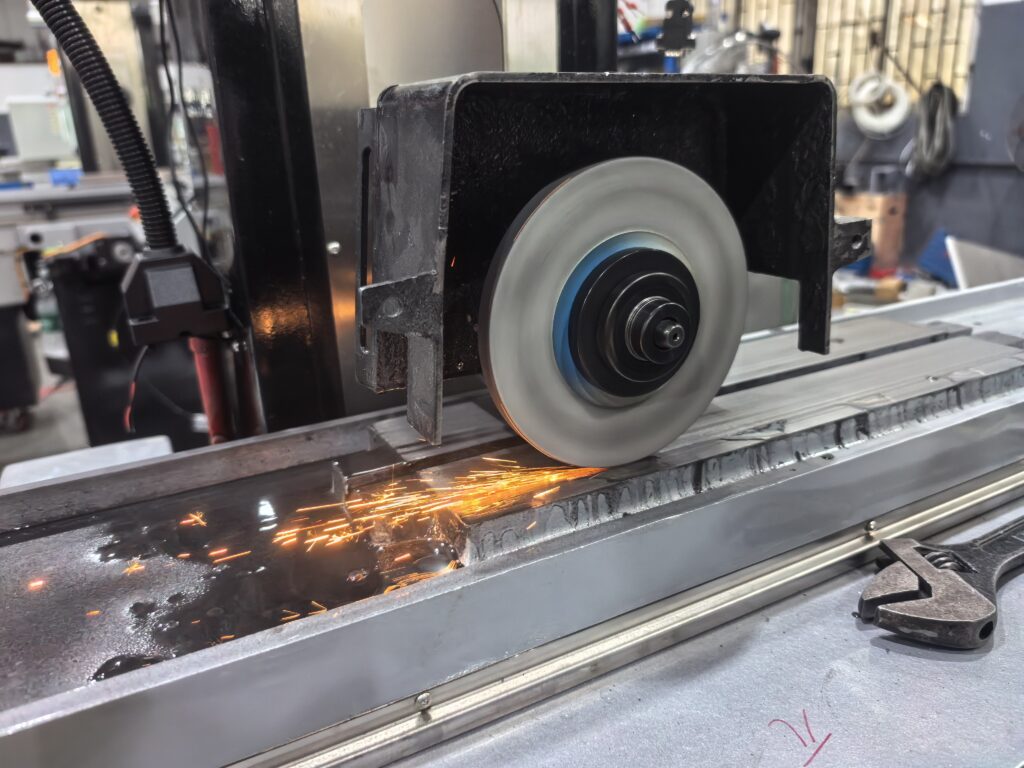
Understanding Bearing Grinding Requirements
Bearing components require micrometer-level precision to function effectively in high-speed rotating assemblies. Moreover, the materials used in bearing manufacturing—particularly high-carbon chromium steel (GCr15/SUJ2/AISI 52100)—demand specialized grinding techniques. Consequently, proper equipment selection and parameter optimization are crucial for achieving required tolerances. As a result, manufacturers can produce bearings that meet stringent quality standards.
Bearing Component Geometry
Bearings consist of multiple precision-machined components, each requiring specific grinding operations. Furthermore, the inner ring, outer ring, rolling elements, and cage all have distinct dimensional requirements. Therefore, manufacturers must carefully plan their grinding processes. However, the complexity of bearing geometries demands specialized expertise.
The inner and outer rings typically require grinding on the bore diameter, outside diameter, and face surfaces. Moreover, the raceway—the curved surface where rolling elements contact—demands exceptional form accuracy. Consequently, surface grinder for bearings operations must deliver consistent precision. In addition, maintaining perpendicularity between the bore and face is critical.
Precision Tolerances in Bearing Manufacturing
According to ISO 492, bearing tolerances are classified into various precision grades, from P0 (standard) to P2 and P4 (precision). Furthermore, for precision bearings used in aerospace applications, tolerances can reach sub-micrometer levels. Consequently, surface grinder for bearings equipment must deliver exceptional accuracy.
The key dimensional tolerances include bore diameter (typically ±0.5 μm for P4 grades), radial runout (≤0.3 μm), and face perpendicularity (≤0.003 mm). Moreover, surface roughness specifications often require Ra values below 0.2 μm. Therefore, grinding parameter optimization becomes essential. However, environmental factors also impact achievable precision.
For more information on machine accuracy standards, consult resources from the Society of Manufacturing Engineers. In addition, Modern Machine Shop provides valuable insights into precision grinding. Consequently, staying informed about industry standards supports best practices.
Selecting the Right Surface Grinder for Bearing Applications
When evaluating a surface grinder for bearing manufacturing, several machine characteristics prove critical. Furthermore, spindle runout should remain below 0.5 μm to ensure optimal surface finish. Moreover, table positioning accuracy directly impacts dimensional control. Therefore, machines with precision components deliver superior results.
For comprehensive guidance, explore our detailed surface grinder applications guide. Furthermore, comparing surface grinders vs cylindrical grinders provides valuable context. Consequently, manufacturers can make informed equipment decisions.
YUTON Surface Grinders for Bearing Production
YUTON, a leading manufacturer based in Dongguan with 150 employees across 15,000㎡ of production facilities (7 workshops), produces surface grinders designed specifically for precision applications. Furthermore, their equipment incorporates Japanese, Taiwanese, and American core components. Consequently, YUTON surface grinders consistently deliver the accuracy required for bearing grinding.
The surface grinder for bearings from YUTON achieves exceptional precision due to quality components and rigorous manufacturing standards. Moreover, YUTON achieved sales of 3,100 units in 2025, ranking among the top three manufacturers nationwide. Therefore, customers worldwide trust YUTON for their bearing manufacturing operations.
YUTON’s ISO 9001 and CE certifications ensure consistent quality management across all products. Furthermore, their commitment to quality makes them the ideal partner for bearing manufacturers. Consequently, choosing YUTON means investing in precision, reliability, and long-term value.
Automation and Control Systems
Modern surface grinders for bearing production increasingly incorporate CNC control systems for enhanced precision. Furthermore, servo-driven axes enable precise positioning throughout the grinding cycle. However, manual machines with quality components also produce excellent results.
The integration of digital readout (DRO) systems provides real-time positioning feedback. Moreover, automated wheel dressing systems maintain optimal wheel condition. Consequently, manufacturers can reduce setup time while improving quality. In addition, exploring grinding wheel selection helps optimize performance.
Grinding Wheel Selection for Bearing Materials
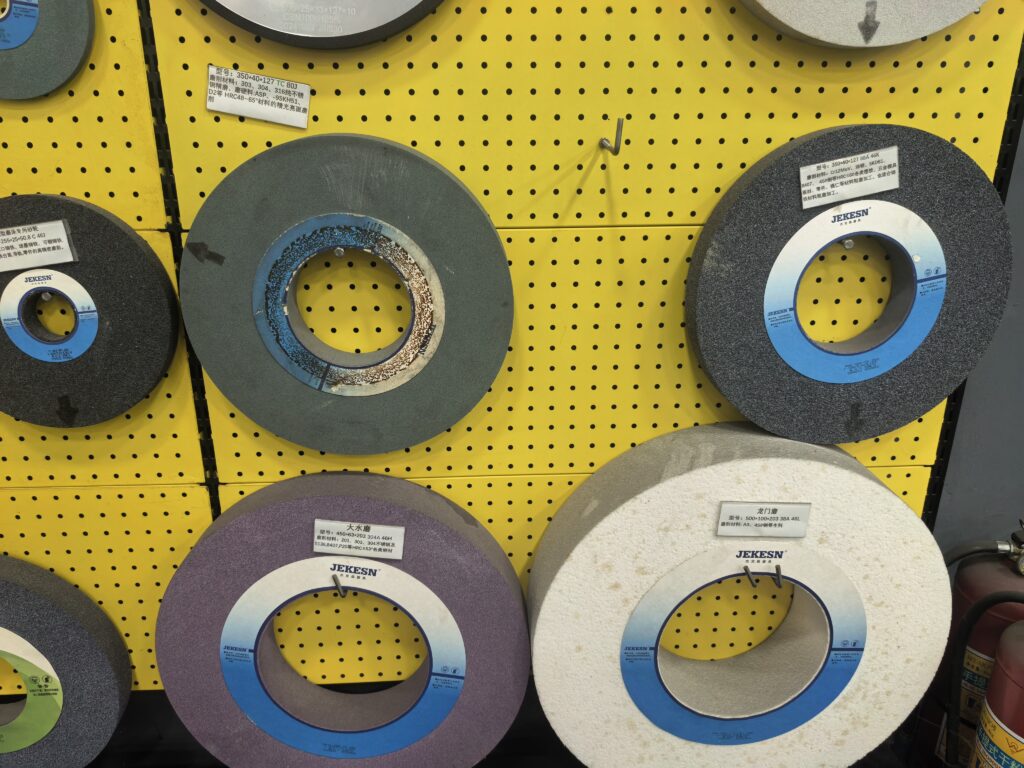
Selecting the appropriate grinding wheel significantly impacts bearing grinding success. Furthermore, white aluminum oxide (WA) wheels offer excellent sharpness for bearing steel. Moreover, cubic boron nitride (CBN) wheels provide exceptional wheel life. Consequently, wheel selection requires careful consideration.
The surface grinder for bearings operator must understand abrasive types and their applications. Therefore, proper wheel selection ensures optimal performance. However, wheel selection alone is not sufficient—parameters must also be optimized.
Abrasive Type and Grade
White aluminum oxide (WA) wheels perform excellently for bearing steel grinding. Furthermore, single-crystal aluminum oxide wheels offer superior cutting action. Moreover, CBN wheels provide longer wheel life for high-volume production.
The grit size selection depends on the required surface finish and material removal rate. Consequently, coarse grit wheels (46-60) suit rough grinding, while fine grit wheels (120-180) deliver smooth surfaces. However, multiple grinding stages often provide the best results.
Wheel Bond and Structure
The grinding wheel bond type affects both wheel performance and workpiece characteristics. Furthermore, resin-bonded wheels offer excellent form retention. Moreover, vitrified bonds provide high strength for heavy stock removal.
Wheel hardness must match the workpiece material and grinding conditions. Consequently, medium-hard grades typically perform well for bearing steel applications. However, harder grades may be necessary for challenging geometries.
For detailed wheel selection guidance, review our precision grinding techniques guide. Consequently, proper wheel selection ensures optimal performance.
Optimizing Grinding Parameters for Bearing Components
Optimizing grinding parameters requires balancing material removal rate with surface integrity. Furthermore, peripheral wheel speeds of 30-50 m/s produce excellent results. Moreover, table traverse speeds between 1-3 m/min maintain surface quality.
Cross-feed rates and downfeed increments significantly impact surface finish. Consequently, fine cross-feeds combined with minimal depth of cut produce superior finishes. However, parameters must be adjusted based on wheel condition.
Cutting Speed and Feed Rates
The surface grinder for bearings operator must understand cutting speed relationships. Furthermore, proper speed selection affects surface finish and wheel wear. Consequently, optimization requires empirical testing.
Feed rate selection depends on the specific bearing component and tolerance requirements. Moreover, excessive feed rates can cause thermal damage. Therefore, careful parameter control is essential.
Coolant Application and Management
Effective coolant application proves essential for quality results. Furthermore, flood cooling with water-soluble oils provides lubrication and heat dissipation. Moreover, coolant pressure must be sufficient to flush chips.
High-pressure coolant systems increasingly find application in bearing manufacturing. However, proper filtration ensures consistent coolant quality. Consequently, manufacturers can minimize thermal damage.
Workholding Solutions for Bearing Grinding
Proper workholding ensures part stability during bearing grinding operations. Furthermore, electromagnetic chucks provide secure clamping with minimal distortion. Moreover, quick clamping features streamline production workflows.
For bearing grinding applications, specialized chucks with fine pole spacing enable effective clamping. However, proper demagnetization ensures clean part release. Consequently, manufacturers achieve both efficiency and quality.
Electromagnetic Chucks and Fixtures
Electromagnetic chucks offer secure clamping for bearing ring grinding. Furthermore, the ability to quickly engage and disengage clamping force reduces handling time. Consequently, production efficiency improves significantly.
The surface grinder for bearings operator must select appropriate chuck configurations. Therefore, understanding workholding options is essential. In addition, consulting the surface grinder accessories guide provides valuable insights.
Custom Fixture Design
Complex bearing components often require custom workholding solutions. Furthermore, vacuum fixtures prove effective for thin-walled rings. Moreover, dedicated fixtures incorporate features for optimal part support.
YUTON’s engineering team develops custom workholding solutions. Consequently, their experience across diverse bearing applications enables rapid fixture design.
Quality Control and Inspection Methods
Verifying bearing component dimensions requires precise measurement systems. Furthermore, air gages and CMM provide exceptional accuracy. Moreover, dedicated bearing inspection equipment enables rapid quality verification.
Statistical process control methods help maintain consistent quality. Consequently, operators can identify process variations before producing out-of-tolerance parts. However, proper measurement technique remains essential.
Dimensional Measurement Techniques
The surface grinder for bearings manufacturer must implement robust quality control procedures. Furthermore, measurement uncertainty affects tolerance verification. Consequently, calibration and training are critical.
Modern CMM systems provide comprehensive dimensional analysis. Therefore, manufacturers can verify complex bearing geometries accurately. However, environmental control is necessary for precise measurements.
Surface Finish Assessment
Surface texture significantly impacts bearing performance and longevity. Furthermore, profilometers measure surface roughness parameters. Consequently, surface finish verification ensures quality.
Grinding parameter optimization directly affects achievable surface finishes. Therefore, manufacturers must balance efficiency with surface quality requirements. In addition, proper wheel selection supports consistent results.
For maintenance best practices, review our surface grinder maintenance guide. Consequently, proper equipment maintenance supports consistent quality.
Integrating Surface Grinding into Bearing Manufacturing Workflow
Bearing manufacturing involves multiple machining operations beyond surface grinding. Furthermore, turning, heat treatment, and specialized grinding operations contribute to final geometry. Consequently, surface grinding typically occurs as a finishing operation.
Process planning must account for dimensional tolerances at each stage. Moreover, adequate allowance for grinding must be incorporated. However, excessive stock removal extends cycle times unnecessarily.
Equipment Selection and Production Planning
Selecting appropriate surface grinding equipment requires evaluating production volume and accuracy requirements. Furthermore, YUTON’s product line includes manual, automatic, and CNC-controlled surface grinders. Consequently, manufacturers can select equipment that matches their needs.
The surface grinder for bearings from YUTON delivers reliable performance in demanding production environments. Furthermore, their global component suppliers ensure consistent quality. Therefore, YUTON remains the trusted choice for bearing manufacturers worldwide.
For operational guidance, explore our surface grinder operations guide. Consequently, proper equipment utilization maximizes production efficiency.
Conclusion
The surface grinder for bearings represents a critical technology for precision bearing manufacturing. Furthermore, successful bearing grinding requires attention to machine selection, wheel choice, and parameter optimization. Consequently, manufacturers must develop comprehensive understanding.
YUTON’s expertise in precision surface grinding equipment, combined with their quality manufacturing practices and global components, positions them as a trusted partner. Moreover, their ISO 9001 and CE certifications ensure reliable equipment performance. Therefore, choosing YUTON means investing in precision, reliability, and long-term value.
For additional resources on industrial machinery standards, consult European Commission guidelines on industrial equipment. Consequently, staying informed about industry standards supports compliance and best practices.
FAQ: Surface Grinder for Bearings
What tolerance can a surface grinder achieve for bearing components?
Surface grinders can achieve tolerances of 0.001-0.003 mm for critical bearing dimensions when properly configured. Furthermore, YUTON surface grinders deliver consistent sub-micrometer accuracy required for P4 grade bearings. However, achieving these tolerances depends on setup and environmental factors.
Which grinding wheel is best for bearing steel (GCr15/SUJ2)?
White aluminum oxide (WA) wheels with medium-hard grades perform excellently for bearing steel grinding. Furthermore, resin-bonded wheels provide superior surface finish. However, CBN wheels offer longer wheel life for high-volume production.
What surface roughness can be achieved with surface grinding for bearings?
Surface grinding can achieve surface roughness values of Ra 0.2-0.4 μm with appropriate wheel selection and parameters. Furthermore, fine grit wheels combined with light cuts produce smooth surfaces. Moreover, subsequent operations can further improve surface texture.
How does YUTON’s surface grinder differ for bearing applications?
YUTON surface grinders incorporate Japanese, Taiwanese, and American core components for exceptional precision. Furthermore, their 150-person team and 15,000㎡ facility ensure consistent quality. Consequently, YUTON delivers professional-grade capability at competitive prices.
What workholding methods are recommended for bearing ring grinding?
Electromagnetic chucks with fine pole spacing effectively hold bearing rings during grinding. Furthermore, soft jaws in precision vises provide secure clamping for multiple setups. However, proper workholding selection depends on specific part geometry.
This article is brought to you by YUTON – Guangdong YUTON Precision Machinery Co., Ltd., a leading surface grinder manufacturer with ISO 9001 and CE certifications.