
CNC Surface Grinding Automation for High-Precision Manufacturing
CNC surface grinding automation is becoming a critical technology for manufacturers seeking higher precision, lower labor costs, and greater production efficiency. As production requirements become increasingly demanding, traditional manual grinding methods often struggle to deliver the consistency, repeatability, and throughput required in modern manufacturing environments. Consequently, more companies are adopting automated CNC grinding solutions to improve quality and remain competitive.
CNC surface grinding automation addresses these challenges by integrating closed-loop control systems, real-time sensor feedback, programmable grinding cycles, and intelligent process optimization. As a result, manufacturers can achieve micron-level accuracy while reducing production costs and increasing throughput.
Drawing insights from recent industry developments and over 15 years of grinding machine manufacturing experience, this guide explains how CNC surface grinding automation is transforming mold making, aerospace, automotive, medical device manufacturing, and other precision industries.
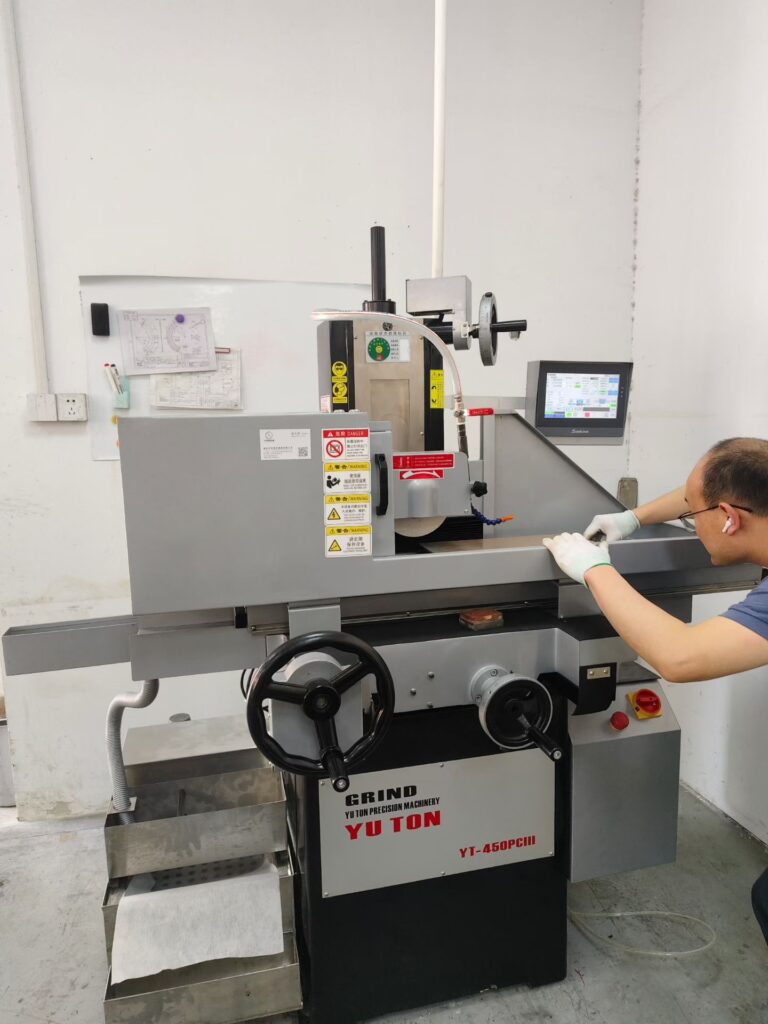
What Is CNC Surface Grinding Automation?
CNC surface grinding automation combines computer numerical control technology with automated grinding processes to achieve precise surface finishing with minimal operator intervention.
Unlike manual or semi-automatic grinders, automated CNC systems provide:
- Programmable grinding cycles
- Automatic wheel dressing
- Real-time process monitoring
- Closed-loop precision control
- Automated compensation for wheel wear
- Consistent production quality
The CNC controller continuously monitors critical grinding parameters, including:
- Wheel speed
- Feed rate
- Grinding depth
- Spindle load
- Table position
When deviations occur, the system automatically adjusts operating parameters to maintain dimensional accuracy. Modern CNC surface grinders can typically achieve tolerances of ±0.002 mm under production conditions.
Key Technologies Behind Automated CNC Grinding
Closed-Loop Control with Real-Time Sensor Feedback
One of the most significant advances in CNC surface grinding automation is the adoption of closed-loop control systems.
Using optical linear scales and precision displacement sensors, the machine continuously measures actual position and grinding conditions. The controller compares these measurements with programmed values and automatically compensates for:
- Wheel wear
- Thermal expansion
- Mechanical backlash
- Positioning errors
Consequently, manufacturers can maintain stable precision during long production runs while minimizing manual measurement and adjustment.
YUTON CNC surface grinders, including the YT-450CNC and YT-40100CNC series, utilize closed-loop control systems designed to maintain high precision throughout continuous production cycles.
AI-Driven Process Optimization
Artificial intelligence is increasingly being integrated into grinding operations.
Advanced algorithms analyze:
- Historical grinding data
- Surface finish measurements
- Wheel wear trends
- Machine load conditions
- Thermal behavior
Based on these insights, the system can recommend or automatically adjust grinding parameters for improved efficiency.
Benefits include:
- 15–25% shorter cycle times
- Improved surface finish consistency
- Reduced trial-and-error setup
- Better wheel utilization
- Enhanced process stability
This technology is especially valuable when grinding hardened tool steel, tungsten carbide, ceramics, and other difficult-to-machine materials.
Multi-Stage Programmable Grinding Cycles
Automated CNC grinders support multi-stage grinding programs that combine:
- Rough Grinding
- Semi-Finish Grinding
- Finish Grinding
- Spark-Out Cycles
Each stage uses independently optimized parameters for maximum efficiency and precision.
As a result, manufacturers can achieve superior surface quality while reducing operator involvement and minimizing process variability.
This capability is particularly beneficial for:
- Mold components
- Precision gauges
- Aerospace parts
- Medical device components
- Optical tooling
How CNC Grinding Automation Improves Manufacturing Performance
Superior Precision and Quality Consistency
Manual grinding often introduces variations caused by operator skill and fatigue.
By contrast, CNC surface grinding automation delivers repeatable results across production batches.
Manufacturers commonly report:
- 60–80% reduction in dimensional variation
- Higher first-pass yield rates
- Reduced rework requirements
- Improved customer satisfaction
For medical and aerospace applications, consistent surface finishes and dimensional stability are critical quality requirements that automated grinding systems help achieve.
Reduced Labor Costs
Labor shortages continue to challenge manufacturers worldwide.
Automation significantly reduces labor requirements because a single operator can supervise multiple machines simultaneously.
Additional labor-saving features include:
- Automatic wheel dressing
- Program storage and recall
- Automated cycle execution
- Reduced manual inspection
Many manufacturers report labor cost reductions of 40–60% after implementing CNC grinding automation.
Faster Production Throughput
Automated grinding eliminates many non-productive activities that slow manual operations.
These include:
- Manual measurements
- Frequent machine adjustments
- Operator-dependent setup changes
Furthermore, CNC systems can integrate with:
- Automatic pallet changers
- Robotic loading systems
- MES production software
- Smart factory automation platforms
Consequently, manufacturers can significantly increase machine utilization and overall productivity.
Lower Total Cost of Ownership
Although CNC grinding automation requires a higher initial investment, long-term operating costs are often substantially lower.
Cost-saving benefits include:
- Reduced scrap rates
- Extended wheel life
- Lower labor costs
- Increased machine utilization
- Reduced downtime
Many manufacturers achieve full return on investment within 12–18 months.
YUTON CNC Surface Grinding Solutions
Precision Grinding Expertise You Can Trust
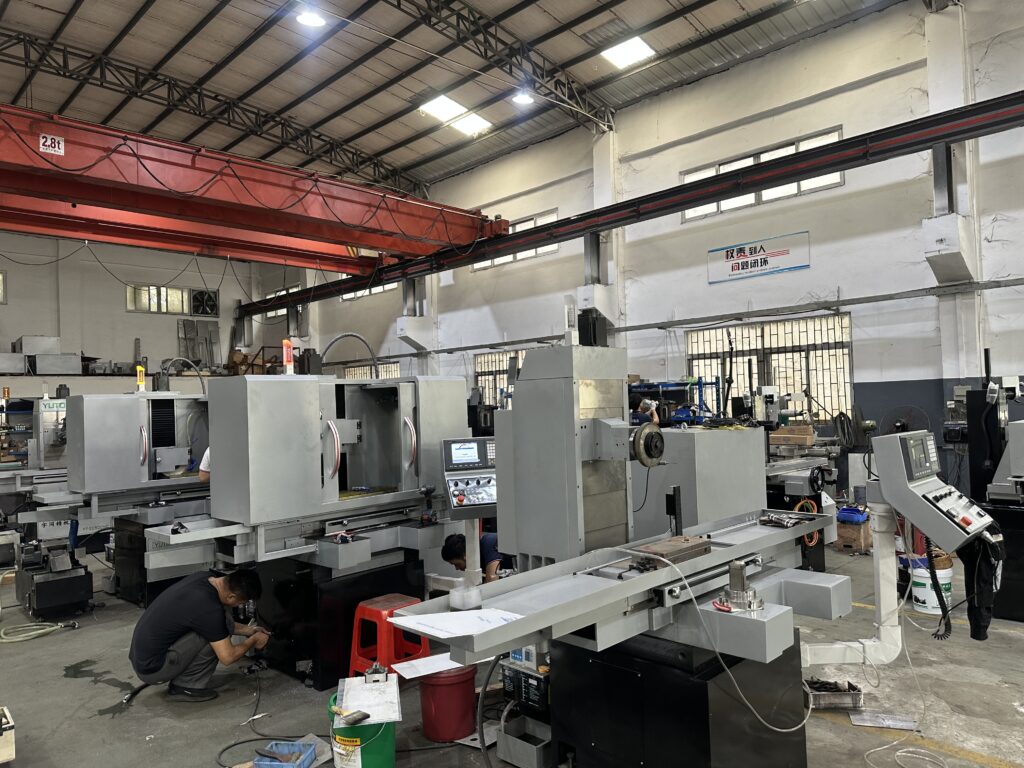
Guangdong YUTON Precision Machinery Co., Ltd. has specialized in precision grinding machine manufacturing for over 15 years.
The company operates:
- 7 manufacturing buildings
- 15,000㎡ production area
- 150+ employees
- Global exports to more than 50 countries
In 2025 alone, YUTON delivered over 3,100 grinding machines worldwide, ranking among the top three surface grinder manufacturers in China.
To ensure long-term reliability and precision retention, YUTON sources critical components from leading suppliers in:
- Japan
- Taiwan
- Germany
- United States
CE Compliance and ISO Quality Assurance
All YUTON surface grinders are manufactured under ISO 9001 quality management standards and carry CE certification.
These certifications help overseas buyers:
- Meet import requirements
- Simplify customs clearance
- Ensure equipment safety compliance
- Reduce purchasing risk
For regulatory information, visit the official European machinery compliance resource:
European Commission Machinery Regulation
Quality management information:
ISO 9001 Quality Management System
Choosing the Right CNC Surface Grinder
Before investing in CNC grinding automation, manufacturers should evaluate several factors.
Workpiece Material
Different materials require different grinding technologies.
Examples include:
- Hardened steel → CBN wheels
- Carbide → Diamond wheels
- Stainless steel → Aluminum oxide wheels
- Ceramics → Diamond grinding solutions
Precision Requirements
Applications requiring sub-micron accuracy may require:
- Optical linear scales
- Temperature compensation systems
- Advanced closed-loop feedback
Clearly defining tolerance requirements helps avoid over- or under-specifying equipment.
Production Volume
High-volume production environments benefit from:
- Automatic wheel dressing
- Robotic loading systems
- Automated pallet changers
Meanwhile, job shops may prioritize flexibility and quick program changeovers.
Total Cost of Ownership
Purchase price is only one part of the investment decision.
Consider:
- Maintenance costs
- Energy consumption
- Consumable expenses
- Operator training
- Technical support availability
Factory-direct suppliers such as YUTON often provide significant cost advantages by eliminating distributor markups.
Frequently Asked Questions
What precision tolerance can a CNC surface grinder achieve?
Modern CNC surface grinders equipped with closed-loop control systems commonly achieve flatness tolerances of ±0.002 mm and parallelism within 0.003 mm per 300 mm travel.
How does CNC grinding automation reduce labor costs?
Automation enables one operator to supervise multiple machines while eliminating many manual tasks such as wheel dressing, measurement, and process adjustments.
What materials can CNC surface grinders process?
CNC surface grinders can process:
- Hardened tool steel
- Stainless steel
- Cast iron
- Tungsten carbide
- Ceramics
- Non-ferrous metals
Proper wheel selection is critical for optimal results.
How quickly can manufacturers achieve ROI?
Most manufacturers recover their investment within 12–18 months through labor savings, reduced scrap, improved productivity, and longer consumable life.
What is the difference between PLC automatic grinders and CNC grinders?
PLC automatic grinders execute predefined cycles with limited programmability and are ideal for repetitive production.
CNC grinders provide complete program flexibility, support complex geometries, and integrate with advanced automation systems.
Can CNC surface grinders be integrated with robotic automation?
Yes. Modern CNC surface grinders can connect with robotic loading systems, pallet changers, and smart manufacturing software to support lights-out production environments.
Which industries benefit most from CNC grinding automation?
Industries that benefit significantly include:
- Mold manufacturing
- Aerospace
- Automotive
- Medical devices
- Semiconductor tooling
- Precision engineering
Recommended Related Resources
Internal Links:
- Manual Surface Grinder
- PLC Surface Grinder
- CNC Surface Grinder
- About YUTON
Industry Resources:
Conclusion
CNC surface grinding automation represents the future of precision manufacturing. By combining intelligent control systems, real-time feedback, automated process optimization, and advanced grinding technologies, manufacturers can achieve higher precision, lower operating costs, and greater production flexibility.
As industries continue moving toward smart manufacturing and automated production, investing in CNC grinding automation has become a strategic decision rather than simply an equipment upgrade.
With more than 15 years of grinding machine manufacturing experience, ISO 9001 certification, CE-compliant products, and factory-direct pricing, YUTON helps manufacturers worldwide implement reliable, cost-effective grinding automation solutions.
Ready to Upgrade Your Grinding Operations?
Request a Quote Today
Discover how YUTON CNC surface grinding solutions can improve precision, increase productivity, and reduce manufacturing costs.
Contact Our Engineering Team for:
- Factory-direct pricing
- Technical consultation
- Machine recommendations
- Automation integration solutions
- Fast quotation within 24 hours
Get Started Today and Build a More Efficient Grinding Operation.