
Introduction
The grinding industry is entering a new era of automation.
At GrindingHub 2026, more than 460 exhibitors from 28 countries demonstrated how automated grinding systems are becoming the standard for modern manufacturing. As labor shortages intensify and precision requirements become stricter, manufacturers are increasingly adopting CNC and PLC surface grinders to improve consistency, reduce costs, and increase productivity.
For procurement managers, factory owners, and machine shop operators, the question is no longer whether to automate grinding operations, but how to choose the right automation solution.
This guide explains how precision grinding automation delivers measurable business value and how YUTON helps manufacturers worldwide achieve reliable and cost-effective grinding performance.
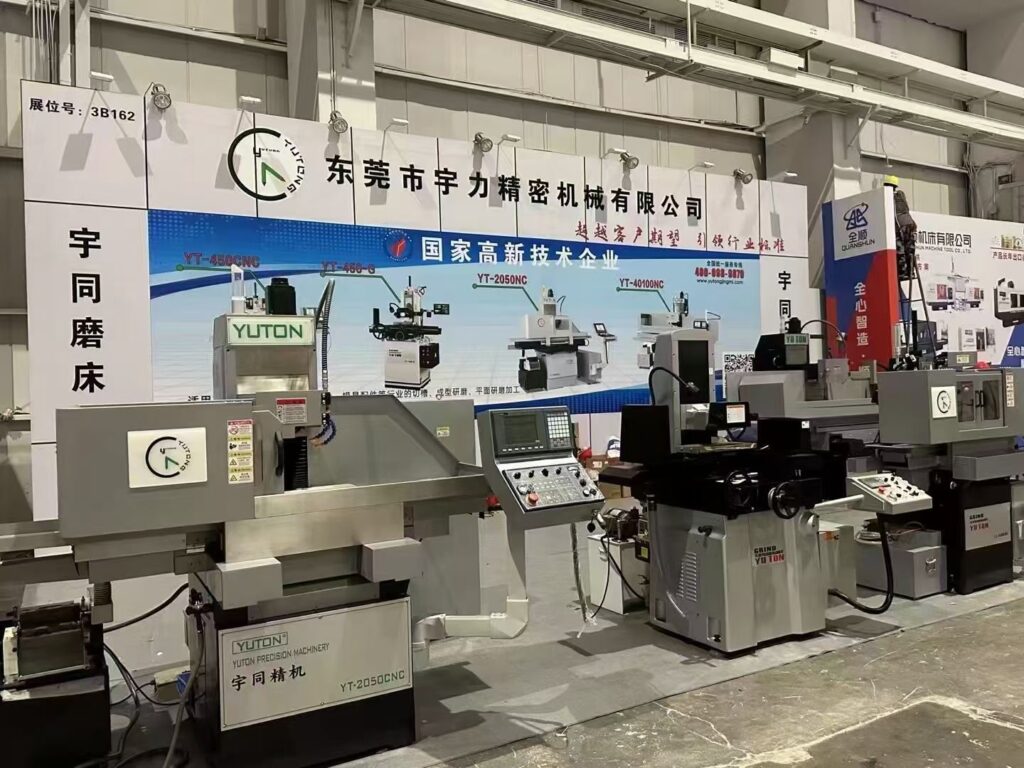
Why Global Manufacturers Choose YUTON
Founded in Dongguan, China, Guangdong YUTON Precision Machinery Co., Ltd. has specialized in precision grinding technology for over 15 years.
Today, YUTON operates:
- 15,000㎡ manufacturing facilities
- 7 production workshops
- 150 skilled employees
- ISO9001-certified quality management system
- CE-certified grinding machines
- More than 3,100 machines delivered in 2025
- Customers in over 50 countries
Every YUTON grinder is built using premium components sourced from Japan, Taiwan, Germany, and the United States to ensure long-term stability, precision retention, and reliable performance.
For company information, visit:
Why Precision Grinding Automation Matters in 2026
Three major challenges are driving automation investments across the manufacturing industry.
Skilled Labor Shortage
Experienced grinding operators are becoming increasingly difficult to find.
As veteran machinists retire, manufacturers face a growing skills gap. Automated CNC and PLC grinding systems preserve process knowledge through programmable controls, allowing one operator to manage multiple machines simultaneously.
As a result, factories can maintain production output without depending entirely on highly experienced operators.
Higher Precision Requirements
Industries such as aerospace, medical devices, mold manufacturing, and precision tooling now require extremely tight tolerances.
Many components demand:
- Flatness below 0.005 mm
- Consistent surface finish
- Repeatable dimensional accuracy
Automated surface grinders maintain stable feed rates and automatic wheel dressing cycles that manual machines cannot consistently achieve.
With closed-loop control technology, the CNC series can achieve:
- X-axis accuracy: ±0.005 mm
- Y-axis accuracy: ±0.002 mm
- Z-axis accuracy: ±0.002 mm
Process Traceability and Quality Control
Global manufacturers increasingly require documented production records for audits and quality assurance.
CNC and PLC systems provide:
- Process monitoring
- Parameter storage
- Production consistency
- Repeatable grinding cycles
These capabilities support ISO9001 quality management requirements and improve overall manufacturing reliability.
PLC vs CNC Surface Grinders: Which Is Right for Your Factory?
Selecting the right automation level depends on your production requirements.
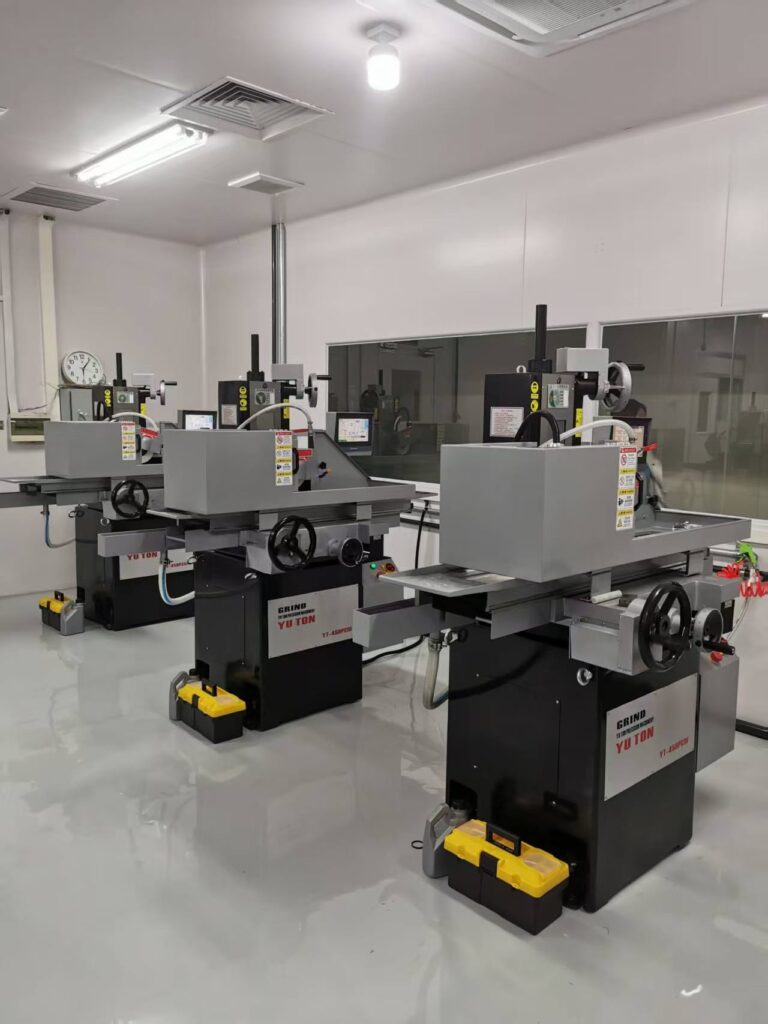
PLC Automatic Surface Grinders
PLC-controlled grinders are ideal for repetitive flat grinding operations.
Recommended Product:
YT-450PCIII PLC Surface Grinder
Learn more:
Key Benefits:
- Easy touchscreen operation
- No G-code programming required
- Automatic grinding cycles
- Automatic wheel dressing
- Lower investment cost
- Fast operator training
Suitable Applications:
- Mold bases
- Precision plates
- Machine components
- Production grinding
Compared with manual grinders, PLC automation typically improves productivity by 30–50%.
CNC Surface Grinders
For more complex applications, CNC control provides greater flexibility.
Recommended Product:
YT-40100CNC Surface Grinder
Learn more:
Advantages:
- Multi-step grinding programs
- Profile grinding
- Slot grinding
- Contour grinding
- CAD/CAM compatibility
- Automatic compensation
Ideal Industries:
- Aerospace
- Medical devices
- Automotive tooling
- Precision molds
CNC systems allow manufacturers to process complex workpieces in a single setup while maintaining exceptional accuracy.
Four Business Problems Solved by Grinding Automation
1. Reducing Production Costs
Automation lowers operating costs through:
- Reduced labor requirements
- Less scrap
- Higher throughput
- Lower rework rates
In most cases, manufacturers achieve ROI within 12–18 months.
For larger production environments, YUTON automatic surface grinders can reduce grinding costs per part by 25–35%.
Explore:
2. Improving Accuracy
Every micron matters in precision manufacturing.
YUTON grinders feature:
- Meehanite cast iron construction
- Precision hand-scraped guideways
- Taiwan spindle systems
- Precision ball screws
- Automatic lubrication systems
These design features ensure long-term accuracy and machine stability.
3. Simplifying Procurement
For overseas procurement teams, comparing multiple suppliers can be challenging.
YUTON provides a complete grinding solution portfolio including:
- Manual surface grinders
- PLC automatic grinders
- CNC surface grinders
- Large saddle-type grinders
- Milling machines
Working with a single supplier simplifies purchasing, training, spare parts management, and technical support.
4. Strengthening After-Sales Support
A common concern for overseas buyers is service availability.
YUTON supports customers through:
- Global distributor network
- Remote diagnostics
- Online technical assistance
- Spare parts supply
- Installation guidance
- Operator training
This support infrastructure helps reduce downtime and protect production schedules.
Case Study: Mold Manufacturer Reduced Grinding Cost by 31%
A mold manufacturer in Southeast Asia upgraded from three manual grinders to two YUTON YT-450PCIII PLC automatic surface grinders.
After six months, the company reported:
| Performance Indicator | Result |
|---|---|
| Grinding Cost per Part | Reduced by 31% |
| Operator Workload | Reduced by 42% |
| Surface Finish | Improved from Ra0.6 to Ra0.3 |
| Scrap Rate | Reduced by 27% |
| ROI Period | 14 Months |
The customer also reported improved process consistency and easier operator training.
GrindingHub 2026 Confirms the Future of Automated Grinding
Recent developments at GrindingHub 2026 highlighted three major trends.
Multi-Function Grinding
Manufacturers increasingly prefer machines capable of completing multiple grinding operations within one setup.
Benefits include:
- Shorter cycle times
- Improved accuracy
- Reduced handling
In-Process Measurement
Modern grinding systems now integrate measurement devices directly into production cycles.
Advantages:
- Real-time correction
- Reduced scrap
- Higher process stability
Affordable Robot Integration
Automation is no longer limited to large corporations.
Collaborative robots and automated loading systems are becoming practical solutions for small and medium-sized manufacturers.
For industry updates, refer to:
and
Society of Manufacturing Engineers (SME)
Precision Grinding Automation Procurement Checklist
| Factor | Key Question | YUTON Advantage |
|---|---|---|
| Accuracy | What tolerance is required? | Up to ±0.002 mm |
| Production Volume | High-volume or mixed production? | PLC and CNC solutions available |
| Programming Skills | Can operators use CNC? | PLC requires no G-code knowledge |
| Certification | Need CE and ISO documents? | Full certification package |
| Support | Is technical service available? | Global support network |
| Customization | Special requirements? | OEM & ODM available |
Frequently Asked Questions
What is precision grinding automation?
Precision grinding automation uses CNC or PLC controls to automate grinding cycles, improving consistency, accuracy, and productivity.
How much does an automated surface grinder cost?
PLC models typically range from $15,000–$50,000, while CNC grinders generally range from $45,000–$120,000 depending on size and configuration.
Can PLC grinders achieve CNC-level accuracy?
For flat surface grinding applications, PLC and CNC grinders can achieve similar accuracy levels. The primary difference is programming flexibility.
How long does operator training take?
Most operators become productive within 2–3 days on PLC systems. CNC systems generally require 1–2 weeks of training.
What maintenance is required?
Routine maintenance includes:
- Lubrication checks
- Hydraulic oil replacement
- Wheel dressing inspection
- Spindle monitoring
Automatic lubrication systems help reduce maintenance workload.
What industries benefit most from automated grinding?
Industries include:
- Aerospace
- Medical devices
- Mold manufacturing
- Automotive tooling
- Precision machinery
What wheel dressing system is recommended?
Automatic wheel dressing systems provide the best consistency, improve wheel life, and maintain stable surface finish quality.
How does grinding automation support Industry 4.0?
Additionally, these systems provide production data., process traceability, machine monitoring, and connectivity that support digital manufacturing initiatives.
Certifications and Compliance
YUTON grinding machines are manufactured under ISO9001 quality management standards and comply with CE requirements for global export markets.
For CE compliance information, visit:
EU Machinery Regulation and CE Marking
Ready to Upgrade Your Grinding Productivity?
Whether you need a cost-effective PLC surface grinder or a fully programmable CNC grinding solution, YUTON can recommend the right machine based on your workpiece size, accuracy requirements, and production volume.
Why Work with YUTON?
✔ Factory Direct Pricing
✔ CE & ISO Certified Machines
✔ OEM & ODM Customization
✔ Global Technical Support
✔ Fast Delivery
✔ Professional Training Services
Request a Free Consultation Today
Our engineering team will recommend the most suitable grinding solution based on your production requirements and provide a customized quotation within 24 hours.
Contact YUTON now and discover how precision grinding automation can improve your productivity, accuracy, and profitability.