
The CNC surface grinding machine industry is entering a new era of intelligent manufacturing. In 2026, CNC surface grinder technology is being transformed by AI automation, Industry 4.0 connectivity, and advanced precision control systems.
Across automotive, aerospace, mold-making, medical device, and precision engineering industries, manufacturers are investing in smarter grinding technologies to improve quality while reducing labor dependency and operational costs.
For companies evaluating new grinding equipment, understanding these emerging trends is essential for making the right long-term investment.
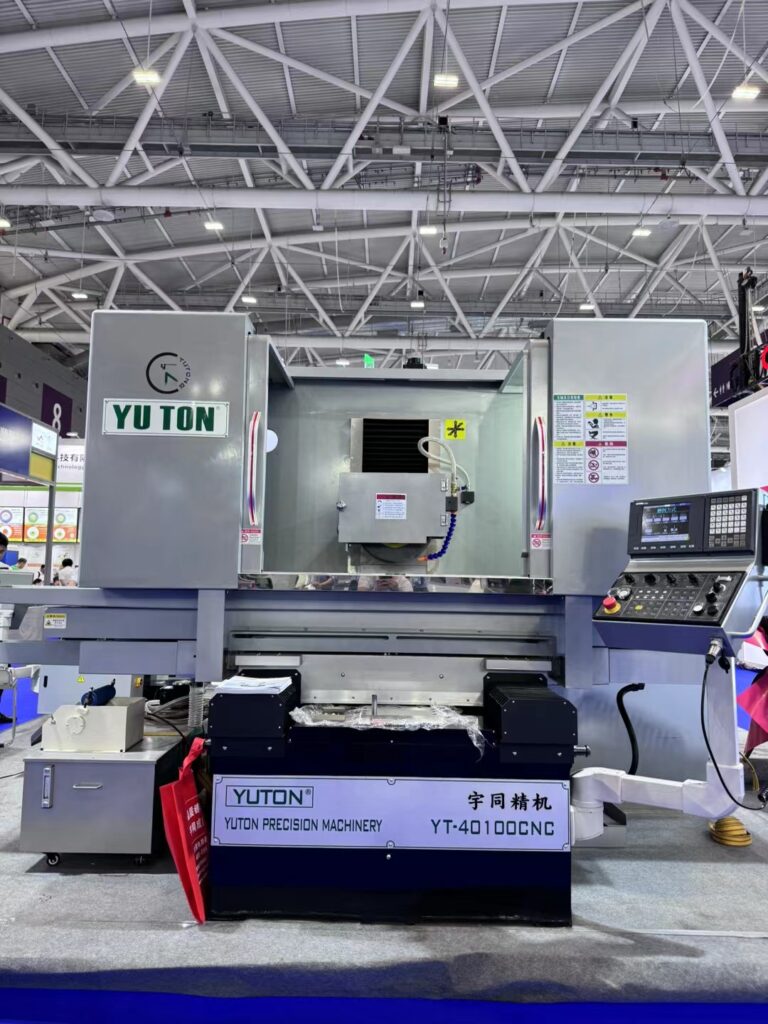
What Is Driving CNC Surface Grinding Machine Innovation in 2026?
The global grinding machinery market continues to expand as manufacturers demand tighter tolerances, improved surface finishes, and higher production efficiency.
Several factors are accelerating innovation:
- Labor shortages in skilled machining positions
- Rising precision requirements
- Increasing energy costs
- Industry 4.0 adoption
- Demand for lights-out manufacturing
- Greater focus on predictive maintenance
As a result, today’s CNC surface grinding machine is no longer simply a material-removal tool. It has evolved into a connected, intelligent manufacturing platform.
At YUTON Surface Grinder, we have observed this shift through more than 15 years of exporting precision grinding machines to over 30 countries worldwide.
AI-Powered Automation Is Transforming Surface Grinding
Artificial intelligence has become one of the most influential technologies in modern grinding operations.
Adaptive Process Control
Advanced CNC surface grinding machines now utilize:
- Real-time force monitoring
- Spindle load analysis
- Thermal compensation systems
- Intelligent wheel wear detection
AI algorithms continuously adjust:
- Feed rates
- Grinding depth
- Wheel speed
- Coolant flow
This closed-loop control system helps maintain consistent accuracy while reducing scrap rates and wheel consumption.
Autonomous Production Cells
Modern automated grinding cells can operate with minimal human intervention.
Benefits include:
- Reduced labor costs
- Higher machine utilization
- Consistent product quality
- Predictive maintenance scheduling
Many manufacturers are now moving toward lights-out production strategies, allowing equipment to run continuously during unattended shifts.
Automation for Small and Medium Manufacturers
Automation is no longer limited to large corporations.
New plug-and-play robotic grinding systems significantly reduce implementation complexity, making automated surface grinding accessible to small and medium-sized manufacturers seeking higher productivity.
Multi-Tasking CNC Surface Grinding Machines Improve Efficiency
Another major trend is process consolidation.
Traditional manufacturing often requires multiple machines for:
- Rough grinding
- Finish grinding
- Edge processing
- Inspection
Modern CNC surface grinding machines increasingly integrate these operations into a single platform.
Single Setup Machining
Processing a workpiece in one setup offers several advantages:
- Improved geometric accuracy
- Reduced handling time
- Lower risk of positioning errors
- Faster production cycles
Single-clamping technology is particularly valuable for:
- Bearing components
- Transmission shafts
- Hydraulic parts
- Precision molds
Hybrid Grinding Technologies
Grinding and electrical discharge machining (EDM) are increasingly being combined in hybrid systems.
These solutions are especially useful when machining:
- PCD tools
- CBN tools
- Carbide materials
- Ultra-hard alloys
The result is greater flexibility and improved surface quality.
Precision Requirements Continue to Increase
Manufacturers are demanding tighter tolerances than ever before.
Modern CNC surface grinding machine applications often require:
| Parameter | Typical Requirement |
|---|---|
| Flatness | ≤ 2 μm |
| Parallelism | ≤ 3 μm |
| Surface Finish | Ra 0.1–0.2 μm |
| Repeatability | ±1 μm |
Meeting these requirements depends on machine design.
Thermally Stable Structures
High-end machines now feature:
- Meehanite cast iron construction
- Thermal compensation systems
- Linear motor drives
- Hydrostatic guideways
These technologies reduce thermal deformation and vibration.
Intelligent Coolant Systems
Temperature-controlled coolant systems help maintain grinding stability.
Benefits include:
- Better dimensional consistency
- Improved surface finish
- Longer wheel life
- Reduced thermal distortion
Automatic Compensation Technology
Integrated measuring systems automatically detect wheel wear and compensate without interrupting production.
This ensures consistent quality throughout long production runs.
Industry 4.0 Is Reshaping Grinding Operations
Industry 4.0 technologies are becoming standard features on advanced CNC surface grinding machines.
Machine Connectivity
Communication protocols such as:
- OPC UA
- MTConnect
allow machines to connect directly with:
- MES systems
- ERP software
- Quality management platforms
Digital Twins
Digital twin technology enables manufacturers to simulate grinding operations before production begins.
Benefits include:
- Reduced setup time
- Lower scrap rates
- Faster process optimization
Cloud-Based Analytics
Manufacturers can now collect and analyze production data across multiple facilities.
This enables:
- Predictive maintenance
- Performance benchmarking
- Continuous improvement initiatives
CNC Surface Grinding Trend Comparison
| Trend | Primary Benefit | Business Impact |
|---|---|---|
| AI Process Control | Real-time optimization | Less scrap |
| Autonomous Cells | Lights-out production | Lower labor costs |
| Multi-Tasking Machines | Single setup machining | Higher accuracy |
| Digital Twins | Virtual simulation | Faster setup |
| Industry 4.0 Connectivity | Data transparency | Better productivity |
International Standards and Compliance
For manufacturers exporting to Europe and North America, machine compliance is increasingly important.
Modern CNC surface grinding machines should meet internationally recognized standards such as ISO 9001 quality management systems and CE certification requirements.
The official ISO organization explains how ISO 9001 improves consistency, risk management, and customer satisfaction across manufacturing operations.
Likewise, CE marking requirements published by the European Commission ensure machinery complies with European safety regulations and market access requirements.
YUTON surface grinders are manufactured according to internationally recognized quality and safety standards, supporting global export projects.
Recommended References
- ISO 9001 Quality Management: https://www.iso.org/iso-9001-quality-management.html
- CE Marking Information: https://single-market-economy.ec.europa.eu/single-market/ce-marking_en
- GrindingHub Exhibition: https://www.grindinghub.de/en/
Why Manufacturers Choose YUTON Surface Grinders
When investing in a CNC surface grinding machine, buyers must evaluate more than machine price.
Important considerations include:
Precision Stability
YUTON machines are engineered to deliver long-term accuracy and repeatability under demanding production conditions.
Lower Total Cost of Ownership
Energy-efficient designs and reliable components help reduce operating costs over the machine lifecycle.
Global Support Network
YUTON provides:
- Remote technical assistance
- Spare parts support
- Application engineering services
- Installation guidance
Export Experience
With exports to more than 30 countries, YUTON understands international compliance requirements and customer expectations.
Expert Recommendation
For manufacturers planning equipment investments in 2026, choosing a CNC surface grinding machine with AI-assisted process control, Industry 4.0 connectivity, automated wheel management, and future automation compatibility will provide the best long-term return on investment.
Machine selection should focus not only on purchase price but also on accuracy stability, maintenance costs, automation readiness, and after-sales support.
Key Takeaways
- AI-powered grinding is becoming the new industry standard.
- Automated grinding cells reduce labor dependency.
- Single-setup machining improves accuracy.
- Industry 4.0 connectivity enhances productivity.
- Precision requirements continue to tighten globally.
- Smart grinding technologies deliver lower operating costs.
- YUTON surface grinders are designed for future-ready manufacturing.
Frequently Asked Questions
What is the difference between a hydraulic and CNC surface grinding machine?
A hydraulic surface grinder uses manual controls and hydraulic table movement, while a CNC surface grinding machine offers programmable operation, automatic wheel dressing, and higher precision for complex applications.
What surface finish can a CNC surface grinding machine achieve?
Most modern CNC surface grinding machines can achieve Ra 0.1–0.2 μm, while advanced finishing systems may achieve Ra 0.02 μm under ideal conditions.
How does AI improve grinding productivity?
AI continuously monitors grinding conditions and automatically adjusts process parameters to improve quality, reduce wheel wear, and minimize scrap.
Is Industry 4.0 important for surface grinding operations?
Yes. Industry 4.0 connectivity enables predictive maintenance, real-time monitoring, production tracking, and process optimization.
What industries use CNC surface grinding machines?
Common industries include automotive, aerospace, medical devices, mold manufacturing, tooling, energy equipment, and precision engineering.
How do I choose the right grinding wheel?
Grinding wheel selection depends on material type, hardness, required finish, and removal rate. Aluminum oxide, silicon carbide, CBN, and diamond wheels are commonly used.
What factors affect grinding accuracy?
Machine rigidity, thermal stability, wheel condition, coolant management, and operator setup all influence grinding accuracy.
Are YUTON surface grinders CE certified?
Yes. YUTON surface grinders are manufactured according to CE requirements and ISO 9001 quality management standards for global markets.
Conclusion
The CNC surface grinding machine industry is evolving rapidly through AI automation, Industry 4.0 connectivity, intelligent process control, and multi-tasking machine technology.
Manufacturers that invest in smart grinding solutions will benefit from improved precision, higher productivity, reduced labor costs, and stronger competitiveness in global markets.
With over 15 years of precision grinding expertise, global export experience, CE-compliant manufacturing, and ISO-certified quality systems, YUTON Surface Grinder continues to help manufacturers achieve reliable, future-ready grinding performance.
Ready to Upgrade Your Grinding Capability?
Request a Quote
Receive a customized machine recommendation and quotation within 24 hours.
Contact YUTON
Discuss your grinding application directly with our engineering team.
Technical Support
Get expert assistance, remote diagnostics, and long-term service support for your grinding operations.