
Surface grinding automation is rapidly changing how manufacturers achieve precision, consistency, and productivity. In 2025, artificial intelligence, collaborative robotics, digital twins, and lights-out manufacturing are no longer concepts for large factories alone. They are becoming practical solutions for grinding shops of all sizes.
Quick Answer
Surface grinding automation combines AI monitoring, robotic loading, in-process measurement, predictive maintenance, and digital twin technology to improve grinding accuracy, reduce labor costs, minimize scrap, and enable unattended production.
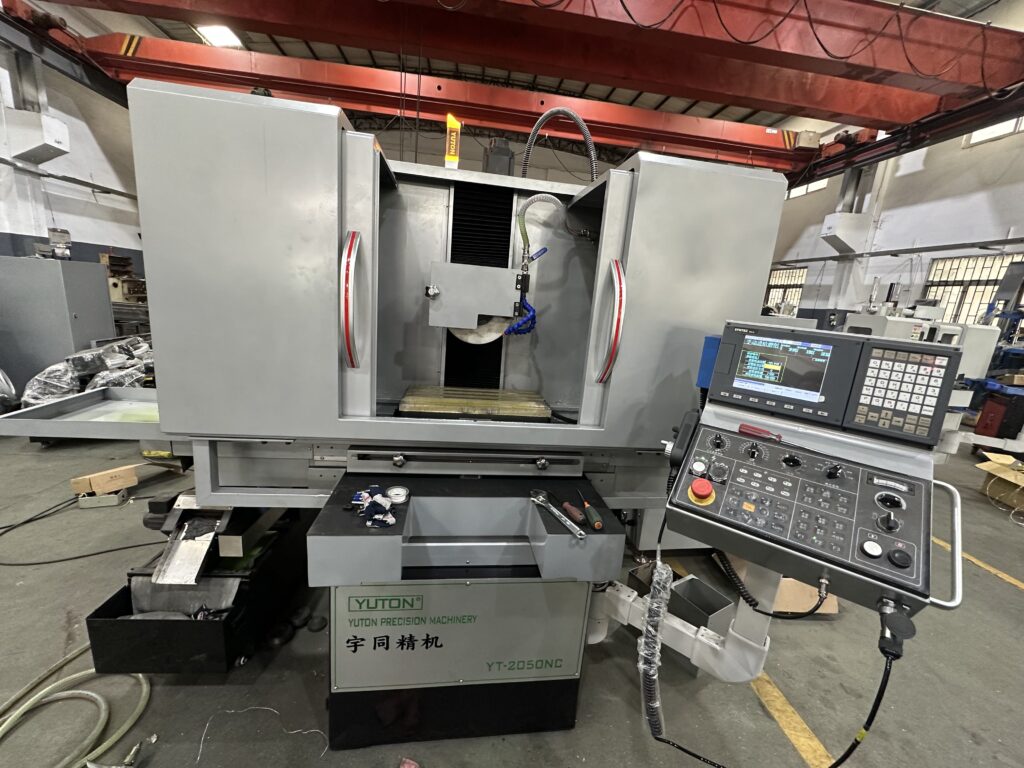
Key Takeaways
- AI-powered grinding systems can reduce scrap rates by up to 40%.
- Lights-out manufacturing increases machine utilization and productivity.
- Collaborative robots improve efficiency in high-mix production environments.
- Digital twins can reduce setup times by 30–50%.
- Predictive maintenance helps prevent costly machine downtime.
- Automated grinding improves consistency and process traceability.
Why Surface Grinding Automation Matters in 2025
Manufacturers worldwide face increasing pressure to produce higher-quality components while reducing operating costs. At the same time, skilled grinding operators are becoming harder to find.
As a result, more companies are investing in surface grinding automation to achieve:
- Higher throughput
- Better dimensional accuracy
- Reduced scrap rates
- Lower labor dependency
- Improved process traceability
Industries such as aerospace, automotive, medical devices, mold manufacturing, and semiconductor production are leading this transformation.
The Evolution of Surface Grinding Automation
Traditional grinding operations relied heavily on operator experience. Adjustments were often made manually based on sound, feel, and visual inspection.
The introduction of CNC controls improved repeatability, but operators still needed to manage process optimization.
Today, modern grinding systems use sensors and intelligent software to monitor:
- Spindle load
- Wheel wear
- Thermal growth
- Vibration patterns
- Surface finish quality
1. AI-Powered Self-Optimizing Grinding Systems
Artificial intelligence is becoming one of the most influential technologies in surface grinding automation.
Instead of using fixed grinding parameters, AI systems continuously analyze machine data and automatically adjust operating conditions.
These systems can:
- Detect wheel glazing
- Predict dressing intervals
- Optimize feed rates
- Compensate for thermal drift
- Reduce dimensional variation
2. Lights-Out Manufacturing Becomes Mainstream
Lights-out manufacturing refers to running machines without operator supervision during nights or weekends.
Modern automated grinding cells include:
- Robotic loading systems
- Automatic pallet changers
- In-process gauging
- Remote monitoring
- Automated part sorting
These technologies allow manufacturers to maximize machine utilization without increasing labor costs.
3. Collaborative Robots Improve Flexibility
Unlike traditional industrial robots, collaborative robots (cobots) are designed to work safely alongside humans.
Benefits include:
- Faster deployment
- Lower investment cost
- Reduced floor space requirements
- Flexible machine tending
Cobots are especially valuable for shops handling small production batches and frequent part changes.
In many facilities, a cobot can load multiple grinding machines while operators focus on inspection and process improvement.
4. In-Process Metrology Enhances Quality Control
One of the biggest advantages of surface grinding automation is the ability to measure parts during production.
Traditional quality control requires:
- Grinding the part
- Removing it from the machine
- Measuring dimensions
- Adjusting machine settings
This process is time-consuming and reactive.
In-process metrology allows the machine to:
- Measure dimensions automatically
- Detect deviations immediately
- Apply real-time compensation
- Maintain tighter tolerances
5. Digital Twins and Predictive Maintenance
Digital twin technology enables manufacturers to create virtual simulations of grinding processes before production begins.
Benefits include:
- Reduced setup time
- Faster process optimization
- Lower material waste
- Improved productivity
At the same time, predictive maintenance systems monitor:
- Bearing condition
- Spindle vibration
- Lubrication quality
- Motor performance
By identifying issues before failure occurs, manufacturers can avoid costly downtime.
Traditional vs Automated Surface Grinding
| Factor | Traditional Grinding | Automated Grinding |
|---|---|---|
| Operator Dependency | High | Low |
| Consistency | Variable | Excellent |
| Production Hours | Single Shift | 24/7 Possible |
| Scrap Rate | Higher | Lower |
| Traceability | Limited | Complete |
| Productivity | Moderate | High |
| Data Collection | Minimal | Comprehensive |
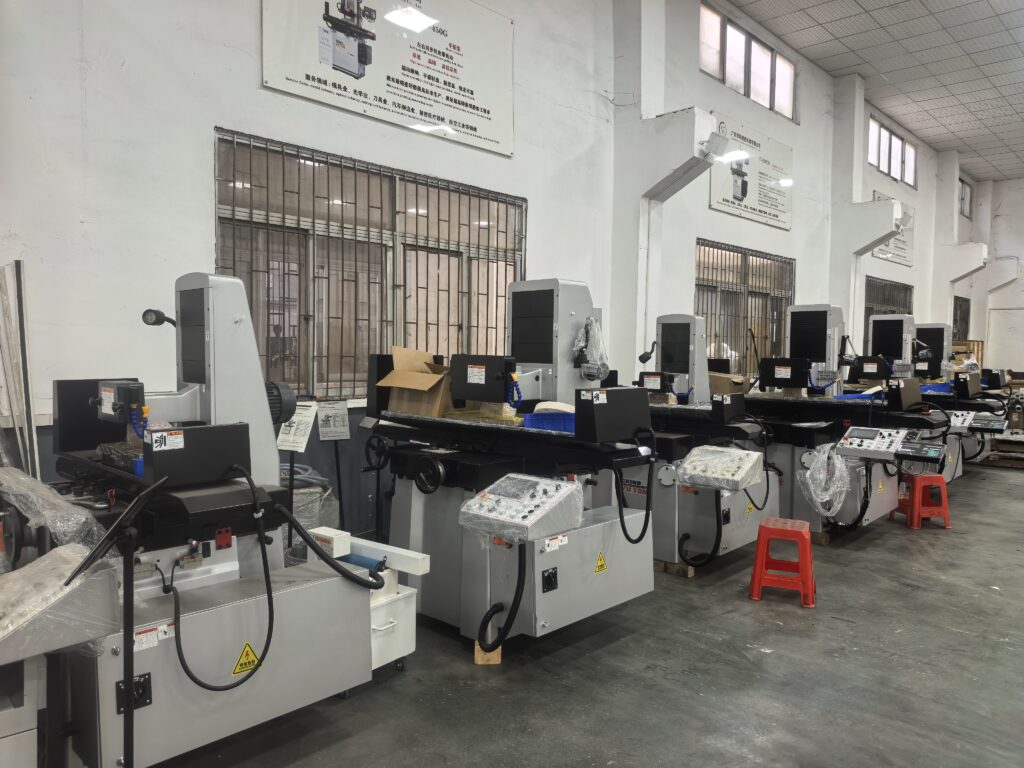
How YUTON Supports Surface Grinding Automation
At <a href=”https://surfacegrindermfg.com/”>YUTON Surface Grinder</a>, we have over 20 years of manufacturing experience serving customers across Europe, Southeast Asia, the Middle East, and the Americas.
Our product range includes:
- Manual Surface Grinders
- Hydraulic Surface Grinders
- Automatic Surface Grinders
- CNC Surface Grinders
All machines are designed with future automation upgrades in mind.
Why Trust YUTON?
- More than 20 years of grinding machine manufacturing experience
- CE-certified product range
- Exported to over 30 countries
- Professional engineering support
- Custom automation solutions available
- Comprehensive after-sales service
Frequently Asked Questions
What is surface grinding automation?
Surface grinding automation refers to the use of intelligent controls, robotics, sensors, and software to improve grinding efficiency, consistency, and productivity while reducing manual intervention.
How does AI improve grinding performance?
AI continuously analyzes machine and process data to optimize feed rates, detect wheel wear, predict maintenance needs, and maintain dimensional accuracy.
What is lights-out manufacturing?
Lights-out manufacturing allows grinding machines to operate unattended during nights or weekends using robotic loading systems, in-process measurement, and remote monitoring.
Which industries benefit most from automated grinding?
Aerospace, automotive, medical devices, mold manufacturing, semiconductor production, and precision tooling industries gain significant benefits from automation.
Can existing surface grinders be upgraded?
Yes. Many grinding machines can be retrofitted with automation components such as cobots, measurement systems, predictive maintenance sensors, and monitoring software.
Conclusion
Surface grinding automation is no longer a future trend—it is becoming a competitive necessity. Manufacturers that adopt AI-driven optimization, lights-out production, collaborative robotics, digital twins, and predictive maintenance will achieve higher quality, greater efficiency, and stronger profitability.
Whether you are upgrading an existing grinding operation or planning a new production line, investing in automation can help future-proof your manufacturing capabilities.
Looking for reliable manual, hydraulic, automatic, or CNC surface grinders? Contact YUTON Surface Grinder today to discuss your automation requirements and discover the ideal solution for your factory.