
Why Automated Grinding Machines Are Changing Batch Production
An automated grinding machine is becoming an important solution for manufacturers that require stable machining quality, higher production efficiency, and reduced manual operation in batch production environments.
This is why more factories are investing in automated grinding machine solutions for precision production environments.
Compared with manual grinding systems, automation helps manufacturers maintain repeatable grinding quality while improving operational efficiency and reducing labor dependency.
As production requirements become more demanding, automated grinding systems are becoming a critical part of modern manufacturing strategy.
Batch Production Requires More Than Grinding Speed
Many factories initially focus on machine speed when evaluating grinding equipment. However, long-term production efficiency depends more on consistency than maximum movement speed.
In batch production environments, unstable grinding conditions may create:
- Dimensional variation
- Surface finish inconsistency
- Frequent machine adjustment
- Increased rejection rate
- Production interruptions
An automated grinding machine helps reduce these risks through controlled grinding cycles and stable process management.
Why Production Consistency Matters in Industrial Grinding
In precision manufacturing, consistency directly affects production cost and delivery reliability.
Stable Grinding Cycles Improve Quality
Automated control maintains consistent machining parameters.
Reduced Manual Adjustment Lowers Downtime
Automation minimizes operator-dependent variation.
Better Repeatability Improves Batch Accuracy
Consistent grinding improves dimensional stability across multiple workpieces.
Predictable Production Improves Workflow
Stable machining processes support delivery scheduling and production planning.
Factories producing automotive parts, tooling, molds, and industrial components increasingly rely on grinding automation to maintain production stability.
The Shift From Manual Grinding to Automation
Many workshops upgrading from manual grinding systems are not necessarily looking for full CNC automation immediately.
Instead, manufacturers often begin with semi-automatic or PLC-controlled grinding solutions.
Why Semi-Automatic Systems Are Popular
- Easier operator transition
- Lower investment cost
- Improved grinding consistency
- Flexible production capability
This makes semi-automatic grinding systems suitable for factories balancing production efficiency with operational flexibility.
Explore our Semi Automatic Grinding System Guide for flexible automation solutions.
What Buyers Should Evaluate in Automated Grinding Systems
Not all automated grinding machine systems provide stable long-term production performance.
Machine Rigidity
Rigid structures improve grinding stability.
Spindle Reliability
Stable spindle systems improve surface finish consistency.
Automation Control Stability
Reliable PLC or CNC systems reduce operational fluctuation.
Maintenance Accessibility
Efficient maintenance improves production uptime.
Technical Support Capability
Professional support reduces long-term operational risk.
For industrial manufacturers, stable production performance is often more valuable than low initial machine cost.
How Automation Reduces Production Pressure
Modern factories face increasing challenges including labor shortages, rising costs, and stricter quality requirements.
Grinding automation helps manufacturers improve production management through:
- Reduced operator dependency
- Improved production repeatability
- Lower rejection rates
- Better production efficiency
- More stable machining quality
This is especially important for factories handling large-volume precision machining applications.
Learn more about long-term machining consistency in our Grinding Process Consistency Guide.
How YUTON Supports Automated Grinding Production
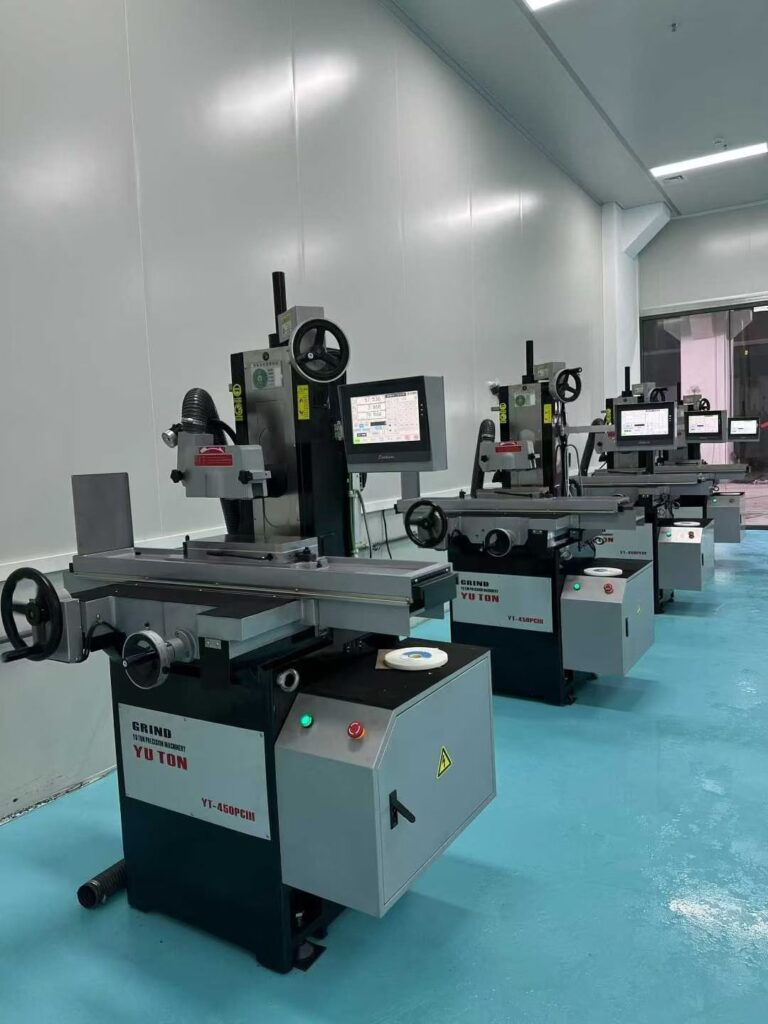
YUTON provides automated grinding machine solutions designed for industrial batch production environments.
Instead of focusing only on machine automation functions, YUTON emphasizes:
- Structural rigidity
- Long-term grinding stability
- Production reliability
- Operational consistency
Manufacturing Capability
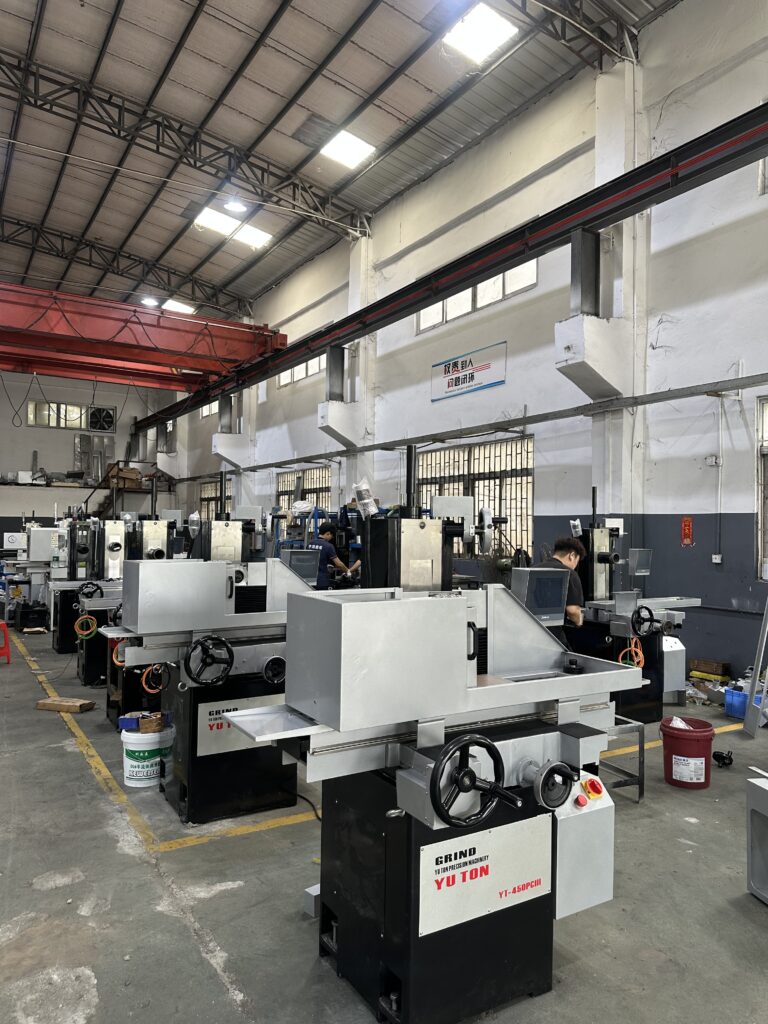
- 7 factory buildings
- 15,000㎡ manufacturing area
- 150 engineering and technical staff
- ISO9001 certified manufacturing system
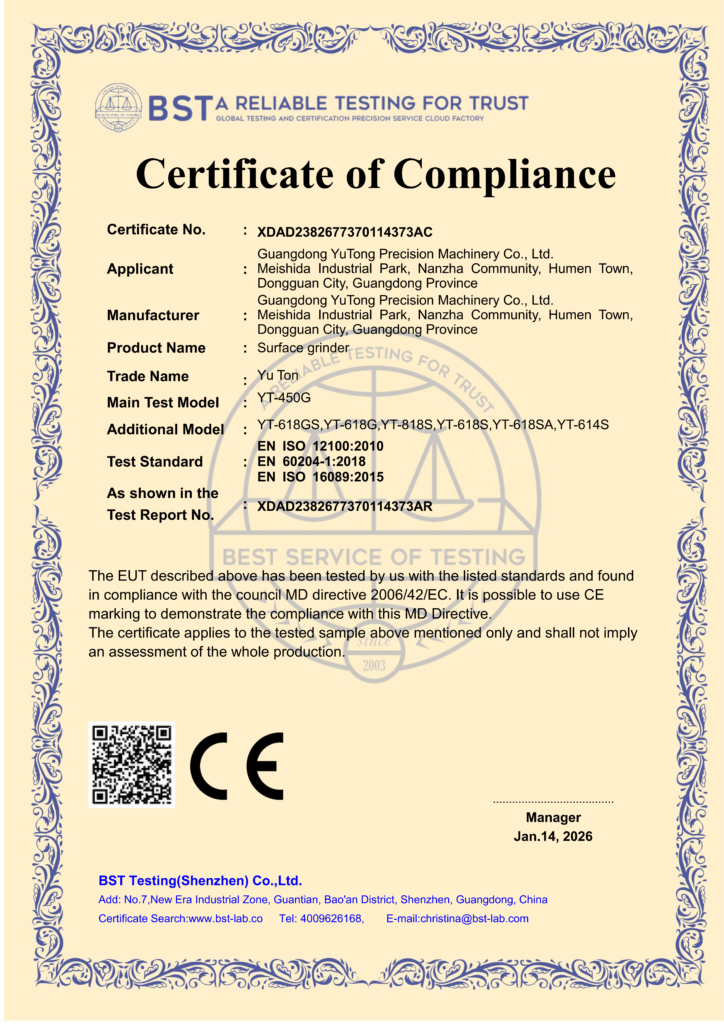
- CE certification requirements machines
- Annual sales of 3,100 grinding machines in 2025
Automation Advantages
- PLC and CNC grinding options
- Stable automatic grinding cycles
- Precision spindle systems
- Heavy-duty machine structure
- International brand components
- Factory-direct pricing
Global Customer Support
YUTON supports overseas customers with:
- Export packing
- Installation guidance
- Technical support
- Spare parts service
- OEM cooperation
- Distributor partnership programs
Choosing the Right Grinding Automation Strategy
Different production environments require different automation levels.
Manual Grinding Systems
Suitable for flexible small-batch machining.
Semi-Automatic Grinding Systems
Suitable for mixed production environments.
Fully Automated Grinding Systems
Ideal for continuous high-volume production.
Understanding actual production requirements helps manufacturers choose grinding solutions more effectively.
Request Automated Grinding Recommendation
Looking for a reliable automated grinding machine for industrial batch production?
YUTON can recommend the right grinding solution based on your production volume, machining requirements, and automation goals.
Get Fast Quote
Send your production requirements now for machine recommendation and factory pricing.
Distributor Cooperation
Contact YUTON today for dealership and OEM cooperation opportunities.
FAQ
Why are automated grinding machines important for batch production?
Automation improves production consistency, reduces downtime, and supports stable machining quality.
Can automated grinding reduce labor dependency?
Yes. Automation reduces manual adjustment and operator influence during grinding.
Are semi-automatic systems suitable for medium-volume production?
Yes. Semi-automatic grinding systems balance flexibility and production efficiency.
What affects automated grinding stability?
Machine rigidity, spindle quality, and control system stability all affect grinding performance.
Can YUTON provide export-certified automated grinding systems?
Yes. YUTON provides CE certified grinding machines for overseas industrial markets.