
Surface Grinding Process: Complete Guide for Precision Machining
The surface grinding process is one of the most widely used precision machining methods in modern manufacturing. It is essential for producing flat surfaces, tight tolerances, and fine surface finishes across a wide range of industrial applications.
From mold manufacturing to precision machinery production, surface grinding helps manufacturers achieve higher dimensional accuracy and better product consistency.
As global industries continue demanding tighter tolerances and improved surface quality, understanding the surface grinding process becomes increasingly important for manufacturers looking to improve machining efficiency and production quality.
What Is the Surface Grinding Process?
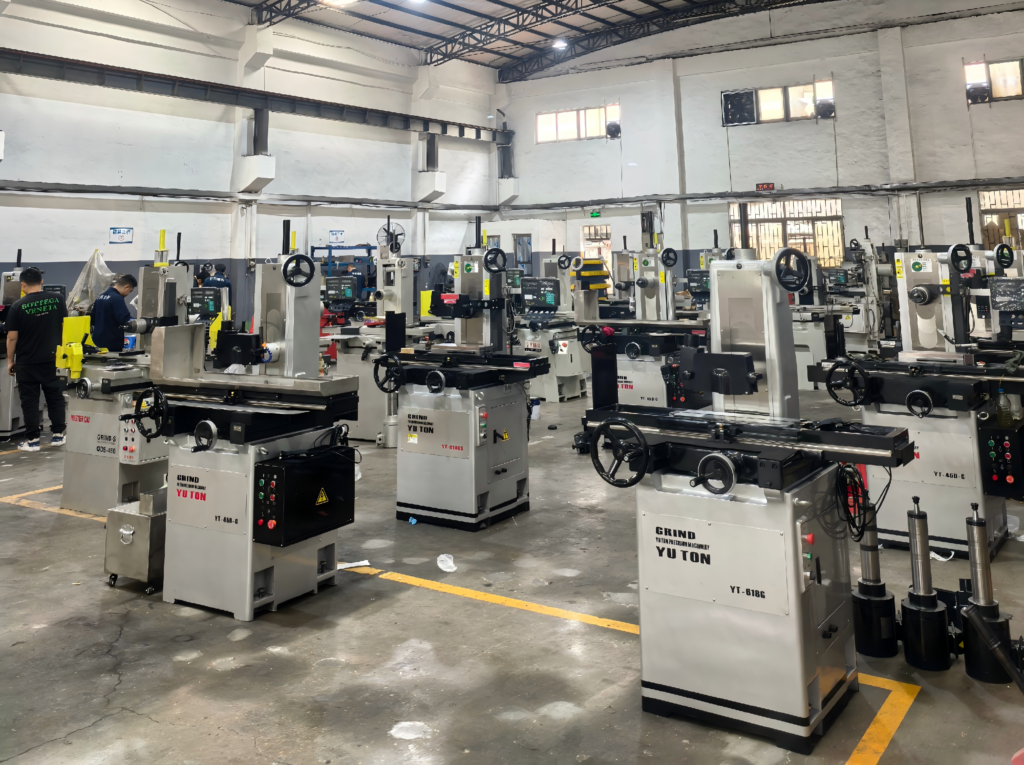
The surface grinding process is a precision finishing operation that removes small amounts of material from a workpiece surface using a rotating abrasive grinding wheel.
The primary objective of surface grinding is to achieve:
- High flatness accuracy
- Smooth surface finishes
- Precise thickness control
- Parallel surface precision
- Improved dimensional consistency
Surface grinding is commonly performed on:
- Hardened steel
- Stainless steel
- Tool steel
- Carbide materials
- Aluminum alloys
- Ceramic components
The process is widely used in precision manufacturing industries where machining accuracy is critical.
How Does the Surface Grinding Process Work?
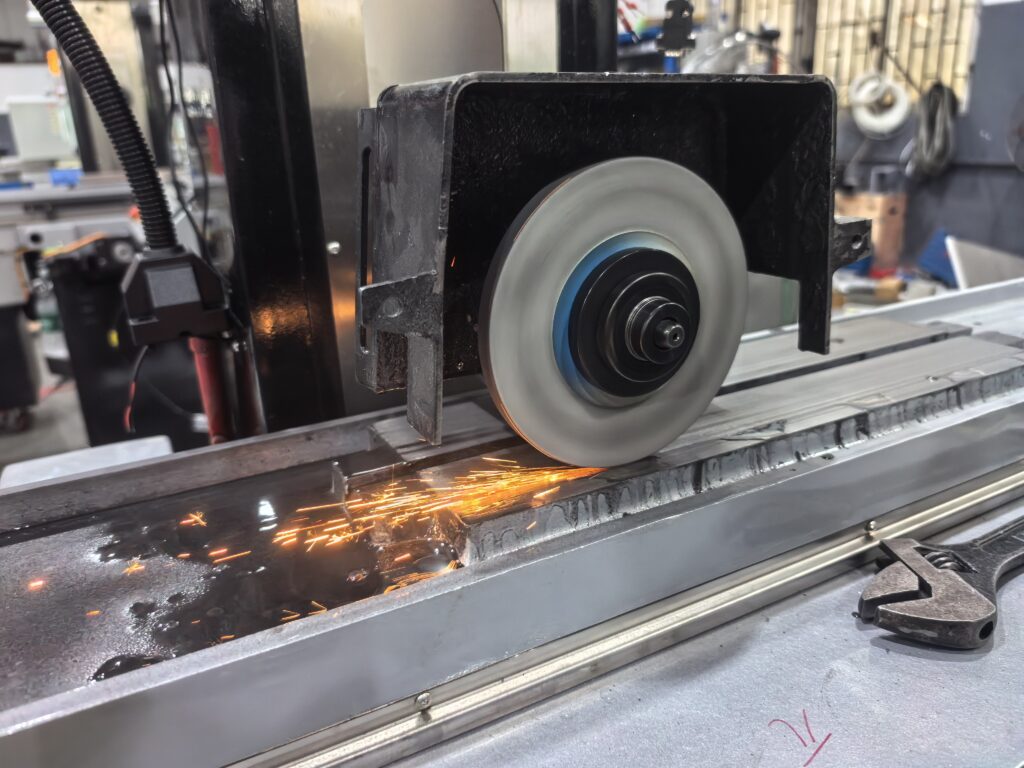
The surface grinding process involves controlled abrasive cutting using a high-speed grinding wheel.
The basic working procedure includes:
- Securing the workpiece on the machine table
- Rotating the grinding wheel at high speed
- Moving the worktable longitudinally
- Feeding the grinding wheel downward gradually
- Removing material layer by layer
During grinding, extremely small chips are removed from the workpiece surface, allowing micron-level precision.
The process generates minimal cutting depth but achieves exceptional surface quality.
Main Components in the Surface Grinding Process
Understanding the major machine components helps improve grinding performance and operational efficiency.
Grinding Wheel
The grinding wheel is the primary cutting tool in the surface grinding process.
Different wheel materials are selected depending on the application:
- Aluminum oxide wheels
- Silicon carbide wheels
- CBN grinding wheels
- Diamond grinding wheels
Grinding wheel selection directly affects:
- Surface finish
- Grinding efficiency
- Wheel life
- Workpiece quality
Magnetic Chuck
The magnetic chuck secures ferrous workpieces during grinding.
Benefits include:
- Stable workholding
- Improved precision
- Faster setup
- Better grinding consistency
For non-magnetic materials, special fixtures or vacuum systems may be used.
Spindle System
The spindle rotates the grinding wheel at high speed.
A high-precision spindle provides:
- Reduced vibration
- Better surface finish
- Higher grinding accuracy
- Improved machine stability
Spindle quality is one of the most important factors affecting grinding performance.
Worktable
The worktable moves the workpiece during grinding.
Movement types include:
- Manual movement
- Hydraulic movement
- NC automatic movement
- CNC programmable movement
The table motion ensures even material removal across the entire workpiece surface.
Types of Surface Grinding Processes
Different grinding applications require different grinding methods.
Horizontal Spindle Surface Grinding
This is the most common surface grinding configuration.
Features include:
- Flat surface grinding
- High precision
- Excellent surface finish
- Suitable for hardened materials
The grinding wheel contacts the workpiece with its peripheral edge.
Vertical Spindle Surface Grinding
Vertical spindle grinding uses the wheel face for material removal.
Advantages include:
- Faster material removal
- Large surface processing
- High productivity
This method is often used for large industrial components.
Reciprocating Surface Grinding
The worktable moves back and forth during grinding.
This method provides:
- Stable grinding accuracy
- Fine surface finish
- Better dimensional control
It is commonly used in precision mold and tool manufacturing.
Rotary Surface Grinding
Rotary grinding uses a rotating table instead of reciprocating motion.
Benefits include:
- Higher production efficiency
- Continuous grinding operation
- Better suitability for mass production
Advantages of the Surface Grinding Process
The surface grinding process offers several advantages over conventional machining methods.
High Precision Machining
Surface grinding achieves tight tolerances and extremely flat surfaces.
In many cases, grinding accuracy can reach micron-level precision.
Superior Surface Finish
Grinding produces smoother surfaces compared with milling or turning.
This improves:
- Product appearance
- Mechanical performance
- Wear resistance
- Assembly precision
Machining Hardened Materials
Surface grinding can process hardened steel and difficult-to-machine materials efficiently.
This makes it ideal for:
- Mold components
- Cutting tools
- Precision dies
- Carbide parts
Excellent Dimensional Consistency
The process ensures consistent thickness and parallelism in batch production.
This improves overall product quality and reduces rejection rates.
Common Applications of Surface Grinding
The surface grinding process is widely used in many industrial sectors.
Mold and Die Manufacturing
Precision grinding improves mold accuracy and extends tooling life.
Automotive Industry
Surface grinding is used for:
- Engine components
- Precision shafts
- Transmission parts
- Brake system components
Aerospace Manufacturing
Aerospace applications require high dimensional accuracy and superior surface quality.
Surface grinding is critical for many aircraft components.
Precision Machinery
Grinding helps produce highly accurate machine parts used in industrial equipment.
Ceramic Component Processing
Advanced grinding systems can process ceramic materials requiring high precision and smooth finishes.
Factors Affecting Surface Grinding Quality
Several factors influence grinding performance and final surface quality.
Grinding Wheel Selection
Using the correct wheel material and grit size is essential.
Improper wheel selection may cause:
- Surface burns
- Poor finish
- Excessive wheel wear
- Dimensional inaccuracies
Feed Rate
Excessive feed rates can reduce surface quality and increase vibration.
Proper feed control improves grinding stability.
Coolant Application
Grinding coolant helps:
- Reduce heat generation
- Improve surface finish
- Extend wheel life
- Prevent thermal damage
Efficient coolant systems are essential for high-precision grinding.
Machine Rigidity
A rigid machine structure minimizes vibration and improves grinding accuracy.
High-quality cast iron machine bases provide better long-term stability.
How to Improve Surface Grinding Efficiency
Manufacturers can optimize the surface grinding process by:
- Using high-quality grinding wheels
- Maintaining proper spindle condition
- Regularly dressing grinding wheels
- Optimizing coolant flow
- Selecting proper grinding parameters
- Performing preventive machine maintenance
Modern CNC grinding systems can further improve automation and production efficiency.
Why Choose YUTON Surface Grinding Machines?
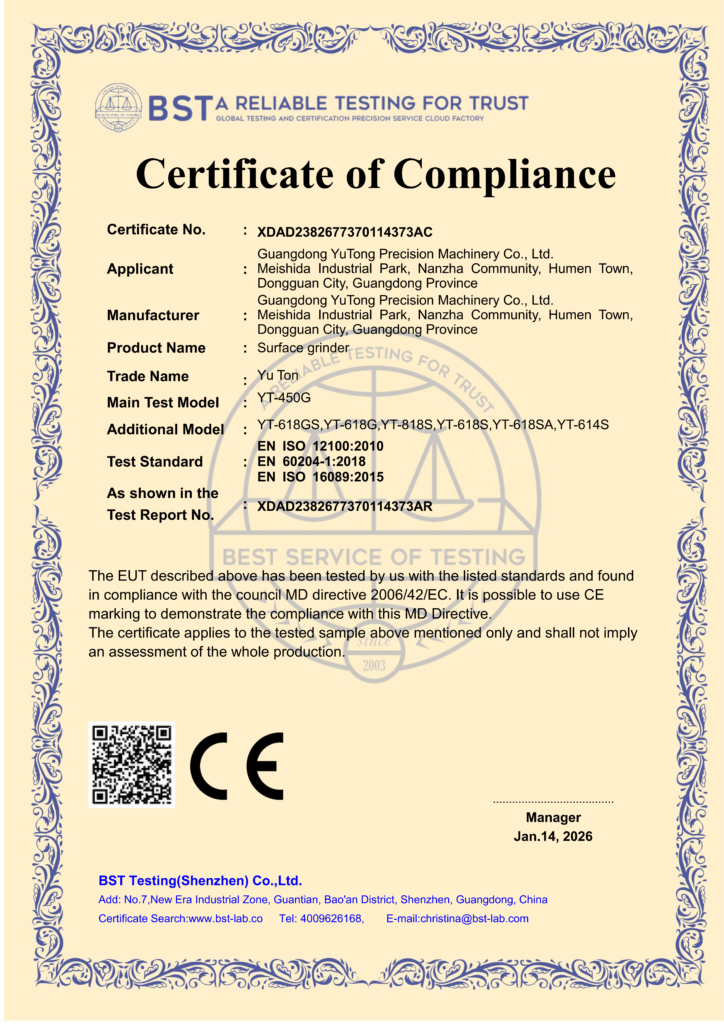
As a professional grinding machine manufacturer, YUTON provides reliable surface grinding solutions for global precision machining industries.
YUTON surface grinding machines offer:
- High-rigidity machine structures
- Precision spindle systems
- Stable grinding accuracy
- Long service life
- User-friendly operation
- Competitive factory pricing
Our product range includes:
- Manual surface grinders
- Hydraulic surface grinders
- NC surface grinders
- CNC surface grinders
- Customized grinding solutions
YUTON machines are widely used in:
- Mold manufacturing
- Precision hardware processing
- Tooling industries
- Industrial component production
With stable quality and professional technical support, YUTON helps manufacturers improve machining precision and production efficiency worldwide.
Conclusion
The surface grinding process is an essential machining technology for achieving high precision, excellent surface finish, and superior dimensional accuracy.
From mold manufacturing to aerospace components, surface grinding continues to play a vital role in modern industrial production.
Choosing the right grinding machine, grinding wheel, and process parameters can significantly improve machining quality and production efficiency.
For manufacturers seeking reliable precision grinding solutions, YUTON offers professional surface grinding machines designed for long-term industrial performance and global manufacturing requirements.